
Leadwork rarely gets much attention from homeowners, yet it is often the single most important detail in stopping water getting into a building. On a re-roof in Redcliffe, lead flashing is fitted at a specific point in the sequence, once the main tiling around a junction is largely complete but before that section is treated as finished, so the lead can be dressed accurately against both the roof covering and the wall or chimney it meets.
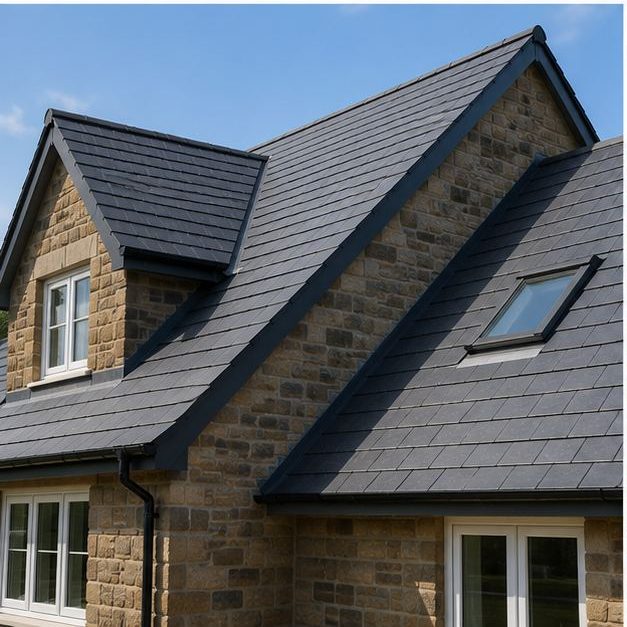
Chimney stacks are one of the most common places leadwork is needed, with soakers, step flashing and an apron or back gutter all working together to shed water around the stack rather than letting it track down into the roof space. Many properties in Redcliffe, particularly older conversions and terraces near the church and harbour, have chimneys that have stood for well over a century, and fitting new lead against aged brickwork calls for a careful, patient approach rather than a standardised fix.
Abutments, where a roof slope meets a taller wall, a parapet or an adjoining building, are another area where leadwork is completed at this stage. This is especially relevant on warehouse conversions and mixed-use buildings in Redcliffe, where roofs frequently sit against masonry that was never designed with a domestic pitched roof in mind. Lead is cut and dressed into a chase in the brickwork or pointed in securely, so movement between materials over time does not open up a gap for water to exploit.
Code 4 or Code 5 lead is typically specified depending on the exposure and span involved, and all lead is fixed with appropriate clips rather than relying purely on weight and dressing, since wind uplift near open water can otherwise work fixings loose over time.
Sequencing matters just as much as the material itself. Fitting lead too early, before the surrounding tiles are in place, makes it difficult to dress accurately against the finished roof line, while leaving it too late risks tiles being disturbed once they are already bedded in. Roofers generally work the leadwork alongside the tiling as each junction is reached, rather than treating it as a separate task done in one pass at the end. On older properties in Redcliffe with softer or more fragile brickwork, care is also taken not to damage the masonry when chasing in a new lead flashing, sometimes using a different fixing method entirely where the wall would not tolerate cutting.
Expansion and contraction of lead with temperature changes is allowed for too, with joints and folds designed to accommodate this movement rather than fixing it rigidly in one continuous run.
Correctly timed, well-fitted leadwork is one of those details that goes unnoticed for decades when done properly, which is exactly the point. Brunel Roofing Bristol pays close attention to leadwork sequencing on every re-roof, and we would be glad to discuss how this applies to a property in Redcliffe.
Get a Free Quote for New Roof Installations in Redcliffe
Every roof is different — the fastest way to get an accurate answer is a quick chat with our team.