
Condensation is an easy problem to underestimate because it doesn't announce itself the way a leak does. There's no obvious drip, no stain spreading across a ceiling, just a slow accumulation of moisture on the underside of the roof covering and on exposed timbers. Over time in a poorly ventilated loft, this quiet build-up can do just as much damage as a genuine leak, and it's a particular concern in Hanham homes where lofts range from largely untouched original spaces to insulated, part-used storage areas.
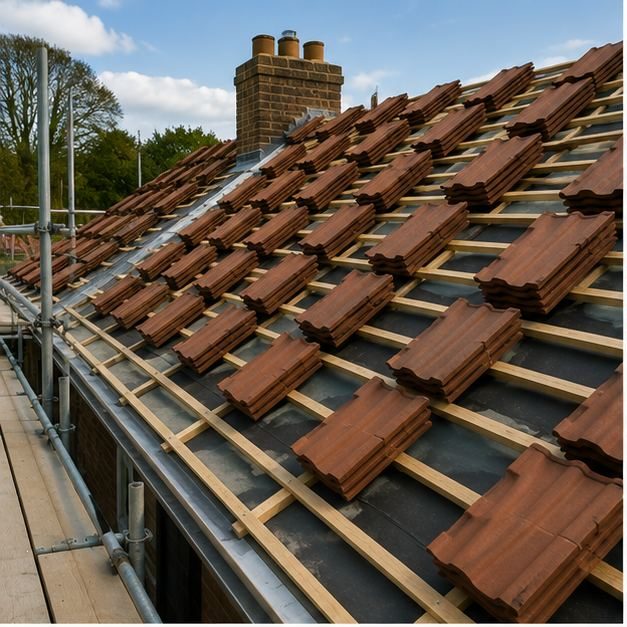
The moisture itself comes from inside the house. Everyday activities like cooking, showering, drying laundry and even breathing send warm, humid air upward, and much of it ends up in the loft. In a well-ventilated roof, that moist air is carried away before it can do any harm. In a loft with insufficient airflow, however, the warm air meets the cold underside of the roof and condenses into droplets, much like moisture forming on a cold glass on a warm day, except here it's settling directly onto timber. In colder months this effect is often at its worst, since the temperature difference between the warm air rising from the house and the cold roof surface is greatest exactly when ventilation is needed most.
Timber that stays damp for extended periods is vulnerable to rot, and rafters, purlins or roof battens affected this way gradually lose their strength. Because this happens out of sight, it's common for the problem to go unnoticed for years, surfacing only when a roof starts to feel less rigid, when nails begin to lose their grip in softened wood, or when a more serious repair becomes necessary. By the time visible signs appear, the damage is often more extensive than it first looks, since rot tends to spread along the grain of the timber well beyond the point where moisture first collected.
Metal fixings aren't immune either. Nails and fittings exposed to repeated condensation can corrode over time, weakening their hold in timber that may already be softened by damp, which compounds the structural concern rather than existing as a separate issue on its own.
Homes in Hanham with older, less-ventilated loft spaces are particularly worth checking, especially where insulation has been added over the years without a corresponding increase in airflow. Adding insulation without addressing ventilation can actually make condensation worse, since it keeps the loft space colder relative to the warm, moist air rising from below, increasing the temperature difference where condensation forms. This is a common and understandable oversight, since insulation upgrades are usually carried out with energy efficiency in mind rather than roof structure, and the connection between the two isn't always obvious at the time.
If you're concerned about damp timbers or simply want reassurance that a loft is properly protected, Brunel Roofing Bristol can inspect the roof space and advise honestly on whether ventilation improvements are needed, giving Hanham homeowners a clear picture before any decisions are made about repair or replacement.
Get a Free Quote for New Roof Installations in Hanham
Every roof is different — the fastest way to get an accurate answer is a quick chat with our team.