
If a flat roof in Clifton is leaking, there's a good chance the source isn't the flat expanse of the roof itself but one of its junctions - the points where the roof meets a wall, a chimney, a parapet, or a pipe passing through the covering. These junctions are consistently the most common source of leaks on flat roofs, and Clifton's period properties, with their chimneys, stonework and parapet walls, have more of them than most.
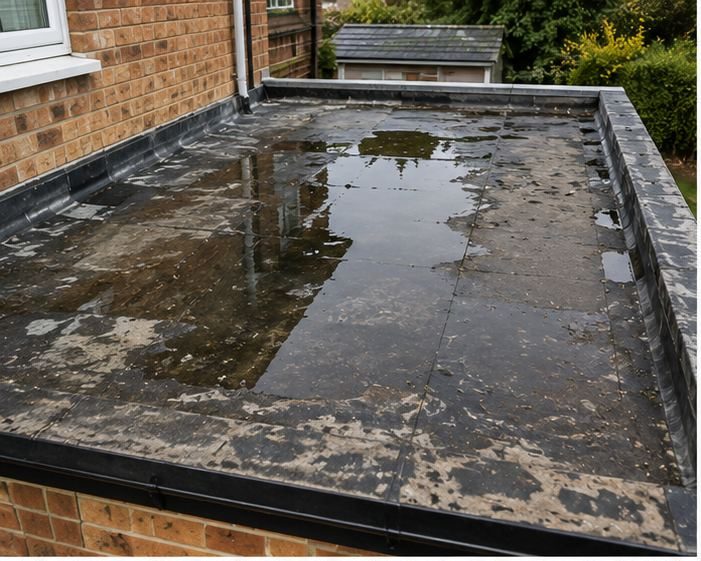
Wall junctions are a frequent culprit. Where a flat roof abuts a vertical wall, the covering needs to be turned up the wall face and properly secured, usually under a flashing or termination bar, to stop water tracking behind it. On older Clifton properties, movement between an extension and the original house structure over time can gradually work at this junction, and if it wasn't detailed correctly in the first place, that movement can eventually open up a path for water.
Chimney stacks are another common trouble spot, particularly given how many Clifton properties retain their original chimneys even if they're no longer in use. The junction around the base of a chimney is complex, involving several angles in a small space, and if the membrane wasn't dressed and weathered correctly, water can track down the stack and into the roof structure, sometimes appearing as a leak some distance away from the actual point of entry.
Parapet walls create their own issues too. Water needs to be directed away from the top of a parapet rather than being allowed to sit against the joint, and on older masonry parapets in particular, deterioration in the wall itself - cracked pointing or porous stone - can let water in above the roofline entirely, which can be mistaken for a roof covering failure when the roof itself is actually sound.
Pipe penetrations, such as soil vent pipes or rooflight upstands, are smaller but equally important junctions. Each one needs a properly formed collar or upstand detail, and poor sealing around any single penetration is enough to cause a persistent leak, even if the rest of the roof is in excellent condition.
The common thread across all of these is that junctions require more skill and attention than the flat field of the roof, and a leak at a junction often isn't a sign the whole roof needs replacing - it may simply need that detail redone properly.
Age is a factor too - a junction detailed to modern standards with quality materials should remain sound for many years, but older detailing carried out decades ago, sometimes using materials and methods that have since been superseded, is naturally more prone to eventual failure, regardless of how well the flat roof area itself has held up.
Catching a junction issue early, before significant water has entered the building, generally means a far simpler and less costly repair than waiting until internal damage becomes apparent.
If you have a leaking flat roof on a Clifton property and suspect it's coming from a junction rather than the main roof area, it's worth having it properly diagnosed rather than guessing. Brunel Roofing Bristol can inspect the roof, identify the actual source, and recommend the right fix.
Get a Free Quote for EPDM Roofing in Clifton
Every roof is different — the fastest way to get an accurate answer is a quick chat with our team.