
Bishopston is known for its leafy, tightly packed streets, and while that character is part of what makes the area so pleasant to live in, it also creates ideal conditions for roof moss on many of the terraces and semis tucked along Gloucester Road's side streets and around Bishop Road itself.
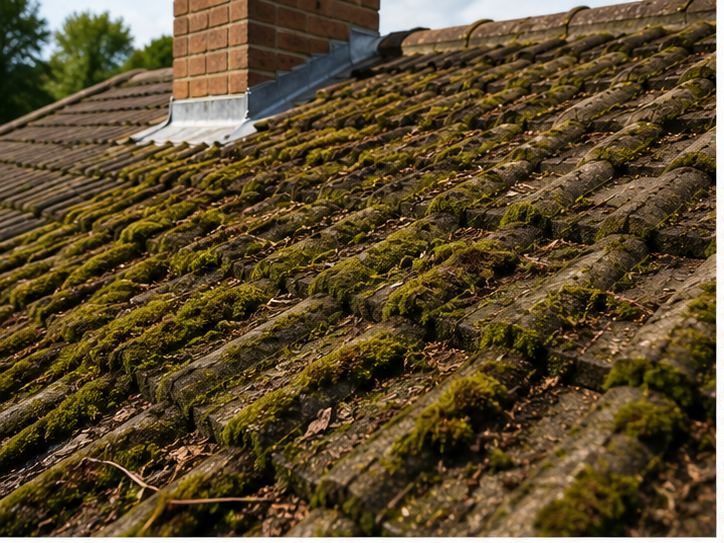
Shade is the single biggest factor moss needs to establish and spread. Roof slopes that rarely see direct sunlight, whether because of their north-facing orientation, overhanging trees, or the shadow cast by a taller neighbouring property, stay damp for far longer after rain than an equivalent roof in a more open, sun-exposed position. That prolonged dampness is precisely what allows moss spores to take hold and thrive.
Roof insulation and ventilation can factor in too, in a less obvious way. A well-ventilated roof space allows some warmth to escape upward, which can marginally help a roof surface dry a little faster than a heavily insulated, poorly ventilated one where less heat reaches the tiles from below. It is a minor consideration next to shade and orientation, but it is one more small piece of why moss behaviour can vary even between two outwardly similar Bishopston properties.
Bishopston's housing density adds to this effect. Rows of closely built Victorian terraces mean many roof slopes sit partially shaded by the properties either side or opposite, particularly on narrower streets, reducing the hours of direct sun any individual roof actually receives across the day compared with a more detached, open property elsewhere.
Mature street trees and well-established back gardens, common throughout Bishopston, compound the problem further. Overhanging branches not only cast additional shade but also drop leaves, blossom, and twigs onto roof surfaces, creating a build-up of organic debris that holds moisture against the tiles and gives moss an even easier foothold than shade alone would provide.
Roof pitch and tile age matter too, but in a genuinely shaded position they become secondary to the underlying issue: even a well-maintained, appropriately pitched roof will struggle to stay moss-free if it barely dries out between one rainfall and the next. This is why some Bishopston homes seem to need cleaning far more often than others just a street away, despite otherwise similar construction.
Understanding why a particular roof is shaded, and how much, is genuinely useful when planning ongoing maintenance, since it helps set realistic expectations about how quickly moss is likely to return after a clean rather than assuming every roof in the area behaves the same way.
Wind direction plays a smaller but still relevant part in this picture too. Prevailing weather driving rain onto an already shaded slope adds to how long that surface stays wet, compounding the effect of reduced sunlight. On a Bishopston terrace where a roof faces both away from the sun and into the prevailing wind and rain, growth can be noticeably heavier than on a roof shaded in similar ways but more sheltered from driving rain, which is a further reason no two roofs behave quite identically even on the same street.
If your Bishopston property sits in a particularly shaded spot and moss keeps building up, it is worth having the roof properly assessed so you understand what you are dealing with. Brunel Roofing Bristol can take a look and advise on the right approach and a sensible maintenance interval for your specific setting.
Get a Free Quote for Roof Cleaning in Bishopston
Every roof is different — the fastest way to get an accurate answer is a quick chat with our team.