
Horfield has a good mix of housing, from inter-war semis to older Victorian terraces near the town centre, and moss is a familiar sight across many of these roofs regardless of exact age or style. There are a few consistent reasons why older roofs in particular tend to attract it more than newer builds nearby.
The main factor is simply time. A roof that has been in place for several decades has had years for airborne moss spores to settle, take root and gradually spread across the tile surface. Newer roofing materials also tend to have smoother, less porous surfaces fresh out of the factory, whereas older tiles and slates have weathered over the years, developing a slightly rougher texture that gives moss and algae more to grip onto.
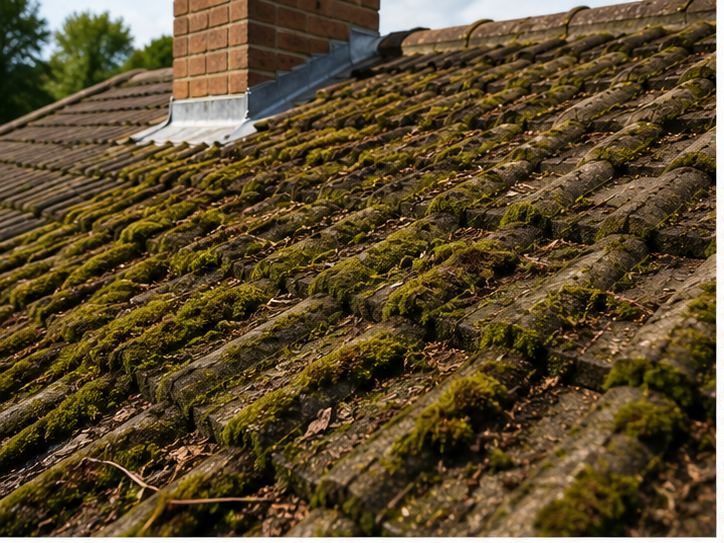
Tree cover plays a significant part too. Many streets in Horfield have mature trees lining gardens and pavements, and roofs sitting beneath or near this kind of cover tend to stay damper for longer after rain, as well as collecting leaf litter and organic debris that moss thrives on. North-facing slopes, or roofs shaded by neighbouring houses for large parts of the day, are almost always the first place moss becomes established.
Older roofs are also more likely to have had less frequent maintenance over the years compared with when they were first laid. Small amounts of debris that build up in valleys, around chimneys, or at the base of a slope where it meets a gutter, all retain moisture and give moss a head start, especially if these areas have not been cleared for some time.
Drainage and ventilation around the roof matter as well. Older Horfield properties sometimes have gutters or downpipes that are undersized by modern standards, or roof detailing that does not shed water quite as efficiently as newer designs, both of which can leave the tile surface damp for longer than it ideally would be.
It is also worth saying that moss on an older roof is not automatically a sign of a serious underlying problem. It is often simply the natural result of an aging, weathered surface in a shaded or tree-lined setting, which describes a fair number of properties across Horfield. The concern comes when that moss has been left to build up thickly over a long period, since that is when it starts holding moisture against the tiles and creating the conditions for other issues.
Understanding why moss has taken hold on a particular roof also helps with deciding how to treat it. A gentle soft-wash approach, rather than aggressive pressure washing, tends to suit older, more weathered tiles far better, since it removes the growth without stripping away the surface or loosening tiles that have been settled in place for many years.
It is also worth remembering that moss returns at different rates depending on how these underlying causes are addressed. A roof that has simply been cleared of visible growth without tackling the drivers behind it will often see moss return sooner than one where a biocide treatment has been applied and any easily addressed factors, such as overhanging branches, have also been looked at.
If you have an older roof in Horfield that has developed a build-up of moss and you would like an honest opinion on what is causing it and how best to deal with it, Brunel Roofing Bristol is happy to take a look.
Get a Free Quote for Roof Cleaning in Horfield
Every roof is different — the fastest way to get an accurate answer is a quick chat with our team.