
When people picture a new roof, they usually think of the tiles or slates on the outside, but a large part of how well a roof performs actually comes down to what sits underneath, on a layer most homeowners in Bedminster have never actually seen and would struggle to picture. This is the roofing felt, or underlay, and on a proper new roof installation it is always replaced rather than left in place, even if the old tiles being removed still looked reasonably sound from the ground.
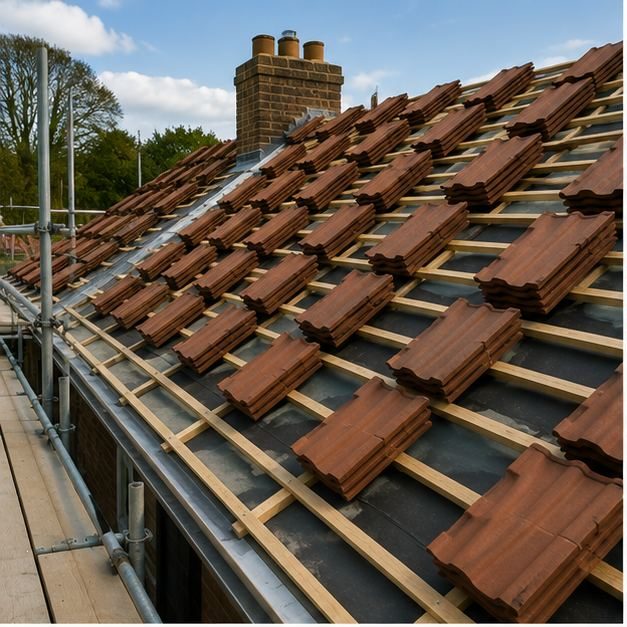
Older properties in Bedminster, particularly Victorian terraces, were often originally built with a bituminous felt underlay, or in some cases none at all, relying instead on close-boarded timber sarking beneath the slates. Bituminous felt becomes brittle with age, cracking and losing its ability to shed any water that gets past the tiles above. Once that happens it stops doing its job of catching wind-driven rain and channelling it safely to the gutter, and moisture can begin reaching the timber battens and rafters underneath without anyone realising until staining appears on a bedroom ceiling.
During a re-roof, removing the old tiles or slates exposes this layer for the first time in decades, and it is the only practical opportunity to replace it. Leaving old felt in place and simply refitting the covering above it would mean burying a failing component back under a new roof, undoing much of the benefit of the work and storing up a problem for whoever owns the house next. Modern breathable membranes used today also perform differently to old bituminous felt, allowing the roof space to manage moisture and ventilation far more effectively than the original materials ever could.
This is also the stage where a roofer can properly inspect the battens and timber structure underneath, since the felt has to come off before new battens go down. Any rot or damage found at this point can be dealt with before it becomes a hidden problem, which is far harder and more disruptive to fix once a roof has been fully reclad and the scaffolding has come down.
Not every membrane is the same either, and the right choice depends partly on how the roof space is used. A vapour-permeable membrane allows a small amount of moisture vapour to pass through from inside the roof space, which suits many standard lofts, while a non-breathable underlay paired with proper ventilation may be specified in other situations. This is a technical decision best left to a roofer who can look at how your particular loft is built and used, rather than a one-size-fits-all choice.
If you are planning a new roof for your Bedminster home, it is worth asking exactly what underlay and battens will be used as part of the job, not just what tiles or slates will go on top. Brunel Roofing Bristol replaces felt and battens as standard on every re-roof and can explain what that involves for your particular property before any work begins.
Get a Free Quote for New Roof Installations in Bedminster
Every roof is different — the fastest way to get an accurate answer is a quick chat with our team.