Pressure washing is a popular way to freshen up patios, driveways and walls, and it can be tempting to assume the same approach will restore a moss-covered roof in Redfield to a cleaner, better-performing state. Unfortunately, what works well on solid paving is often quite unsuitable for roof tiles and slates, which are far more delicate than they appear from ground level and were never designed to withstand a concentrated jet of high-pressure water.
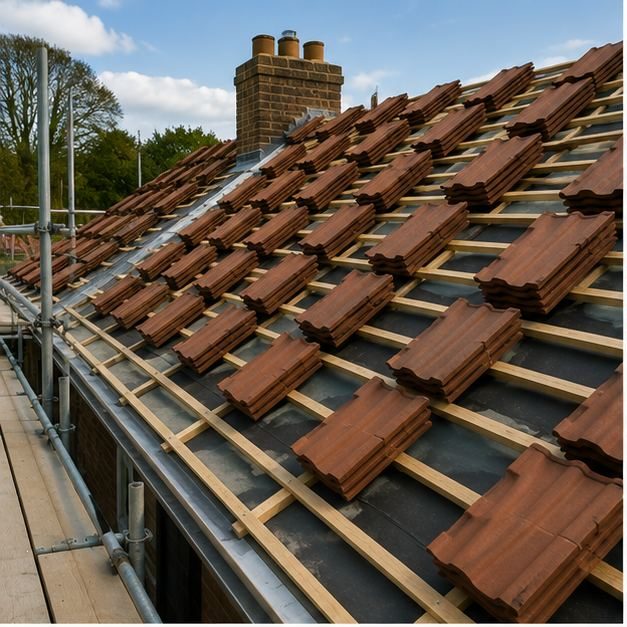
The force used in pressure washing can strip away the thin protective coating on concrete tiles, dislodge the granular surface of older coverings, and in some cases crack tiles that were already weakened by age and years of weathering. Water forced under pressure can also work its way beneath tiles and into the underlay, membrane or timber battens below, potentially introducing damp into parts of the roof structure that would otherwise have remained perfectly dry.
Even where pressure washing does not cause immediately visible damage, it rarely addresses the underlying reason moss or lichen took hold in the first place, such as a shaded north-facing slope, ageing porous tiles or poor surface drainage. Within a relatively short time, growth tends to return, meaning the exercise has to be repeated regularly, at some cost and effort, without ever actually solving the real problem beneath the surface.
There is also a safety dimension worth mentioning. Roofs are steep, often slippery when wet, and not designed for anyone to walk across, so attempting to pressure wash a roof personally, or even standing a machine on a ladder to reach it, carries real risk of a fall. This is one of several reasons roof cleaning is generally best left to professionals who have the right access equipment and training, if it is undertaken at all.
Some products marketed as biocidal roof cleaners are gentler than pressure washing and can be effective at slowing regrowth when applied correctly, but they still do nothing to address structural issues such as cracked tiles, failing felt or crumbling mortar. Treating the symptom on the surface while ignoring the underlying condition of the roof can give a false sense of reassurance at exactly the point a proper inspection would be more valuable.
A cleaner-looking roof can also be a misleading one when it comes to selling a property. A recently pressure-washed roof in Redfield might photograph well and appear well cared for, but a buyer's surveyor is likely to look past the surface and assess the actual condition of the tiles, mortar and flashing, which pressure washing will not have improved and may quietly have made worse.
For a roof that is genuinely failing, whether through cracked tiles, deteriorating felt or crumbling mortar, pressure washing does nothing to restore structural integrity. In some cases it simply reveals damage more clearly, or accelerates problems that a careful visual inspection would have identified without any of the associated risk. If your roof in Redfield is looking tired and you are considering pressure washing as a fix, it is worth speaking to Brunel Roofing Bristol first, so we can advise on whether cleaning is appropriate at all, or whether the underlying condition of the roof means your money is better spent on proper repair or replacement.
Get a Free Quote for New Roof Installations in Redfield
Every roof is different — the fastest way to get an accurate answer is a quick chat with our team.