Chimneys are a feature of many Old Market rooftops, a reminder of the area's history as much as a functional part of the building. They are also one of the most common places for problems to develop on an older roof, which is why checking chimney flashing during any cleaning work matters so much on properties of this age, whatever else the cleaning is intended to achieve.
Flashing is the material, usually lead on older properties, that seals the junction between a chimney stack and the surrounding roof tiles or slate. It is designed to keep water out of a joint that would otherwise be highly vulnerable to leaks, but flashing does not last forever. Over decades of exposure it can lift, split, or come away from the mortar it was originally fixed into, gradually opening a route for water to get into the roof structure beneath.
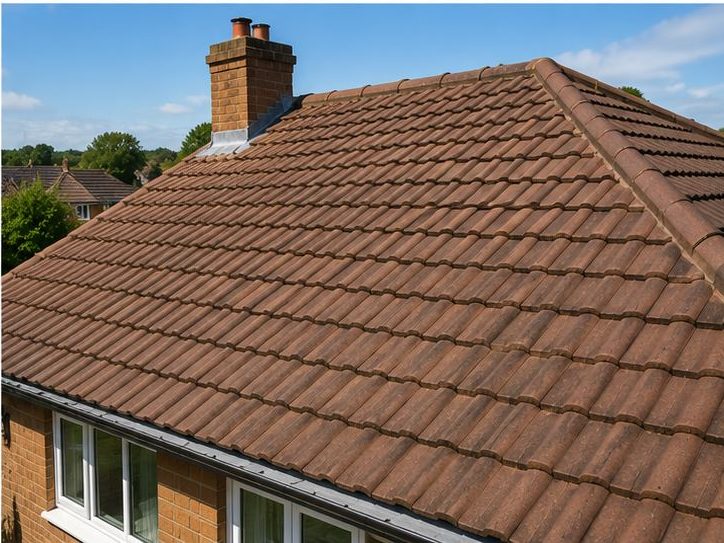
Moss and algae tend to build up around chimneys more than almost anywhere else on a roof, thanks to the shade the stack casts and the extra moisture that collects at this kind of junction. On older Old Market properties, that growth can sit directly over failing flashing or crumbling mortar fillets for a long time without any obvious sign at ground level, quietly allowing a small problem to persist unnoticed for months or even years.
This matters because chimney flashing is one of the most common sources of roof leaks generally, and on older buildings with original lead flashing, the risk is worth taking seriously. Once flashing fails, water can track down inside the chimney breast or along nearby roof timbers, sometimes causing damp patches in rooms well away from the chimney itself before anyone realises what is actually happening.
Cleaning around a chimney using a gentle soft-wash approach, rather than aggressive pressure washing, allows moss to be cleared without disturbing flashing or mortar that may already be fragile. Just as importantly, it gives us a clear view of the chimney junction once the growth is gone, so any developing issues can be spotted and flagged while they remain a straightforward, contained repair.
For Old Market's older properties in particular, treating chimney flashing as a standard check during any roof clean, rather than an optional extra, means problems are far more likely to be caught while they are still straightforward and genuinely affordable to fix, well before they progress into a more serious leak.
Even where a chimney is no longer in active use for a fire or heating appliance, the flashing and surrounding brickwork still need to perform properly as part of the roof's overall weatherproofing, so checking it is just as relevant whether or not the chimney itself is still functional.
Where a property has more than one chimney stack, it is worth having each checked individually rather than assuming their condition is uniform, since exposure, age of repair work, and shading can all vary from one stack to another even on the same roof, leading to noticeably different rates of wear and moss growth over time.
If your Old Market property has a chimney with visible moss buildup, it is worth having it checked properly rather than left. Contact Brunel Roofing Bristol for an assessment, and we will let you know the real condition of the flashing and surrounding roof.
Get a Free Quote for Roof Cleaning in Old Market
Every roof is different — the fastest way to get an accurate answer is a quick chat with our team.