
Chimney flashing rarely gets a second thought until it fails, at which point it can be responsible for a surprising amount of water finding its way into a roof. For homeowners in Horfield, understanding what this leadwork does and how it tends to fail makes it much easier to spot a problem before it turns into a significant indoor leak that spreads across a ceiling. It is also one of the more affordable chimney repairs available, provided the underlying brickwork and mortar joint it needs to be dressed into are themselves in reasonable condition.
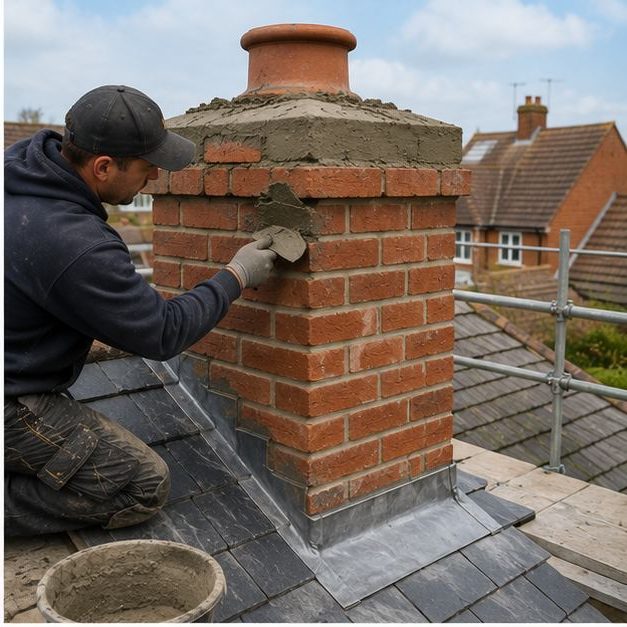
Flashing forms a skirt of lead dressed around the base of the chimney stack where it meets the roof covering, tucked into a mortar joint in the brickwork so that water is shed away from the junction rather than able to seep behind it. It works alongside soakers, smaller pieces of lead woven between individual tiles or slates on the sides of the stack, and on the uphill side, a back gutter that channels water safely around the chimney rather than letting it pool, which is a detail that is easy to overlook but does a lot of quiet work.
Over time, lead can lift away from the brickwork as the mortar joint it sits in weakens, crack from age and thermal movement, or simply corrode thin after decades of exposure. Many properties around Horfield still have original or long-unrenewed flashing, and it is often one of the oldest components on the whole roof, quietly ageing out of sight until a leak forces the issue into the homeowner's attention. Salt-laden air, common a little further from the city centre, and general pollution can also play a part in ageing lead more quickly than in a fully sheltered location.
A telltale sign of failed flashing is a leak that appears after heavy or wind-driven rain rather than steady drizzle, since it is often only under those conditions that water is pushed under a lifted edge of lead. Because water can travel along roof timbers before dripping through a ceiling, the visible damp patch inside the house is not necessarily directly beneath the chimney, which is why tracing the fault properly matters more than assuming the obvious source based on where the stain appears.
Repairing failed flashing means removing the old lead, cleaning out and preparing the mortar joint, and dressing new code lead in correctly so it is mechanically secure rather than relying on sealant, which tends to fail within a season or two in the British climate. Done properly, new flashing should comfortably outlast the roof covering around it and require little further attention for many years. New lead should also be dressed with enough overlap and fall to cope with heavy rain, rather than the bare minimum needed to pass a casual glance.
If you have noticed a leak near a chimney breast in your Horfield home, it is worth having the flashing checked before assuming the brickwork itself is at fault. Brunel Roofing Bristol can inspect and repair chimney leadwork, with a free quote and a 15-year guarantee on the finished work.
Get a Free Quote for Chimney Repairs in Horfield
Every chimney is different — the fastest way to get an accurate answer is a quick chat with our team.