
Chimney lead flashing has a long working life, but it is not permanent, and on Redfield's older terraced housing it is common to find flashing that was fitted decades ago and is now well past being reliably watertight. Knowing when a repair is enough, and when full replacement is the better option, comes down to how far the lead has actually deteriorated rather than simply how old it is.
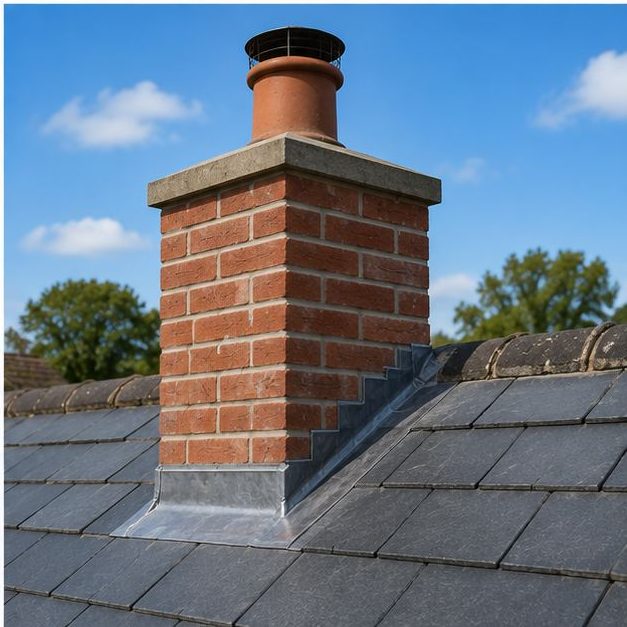
Lead cracks with age and with the constant expansion and contraction it goes through as temperatures change through the seasons. Once cracking has spread across a significant area, or the lead has been patched multiple times by previous owners or previous repairs using unsuitable materials such as bituminous flashing tape, replacement generally gives a far more durable result than attempting another localised patch. Soakers and the back gutter around the chimney, which handle water at the sides and uphill face of the stack, often need attention at the same time, since they are subject to the same ageing process as the main flashing, and replacing one without checking the others rarely solves the problem for good.
A full replacement means removing the old lead entirely and dressing new lead — correctly specified to Code 4 or Code 5 depending on the exposure of the particular stack — into fresh joints in the brickwork, with soakers rewoven between the tiles at the sides of the chimney and a properly formed back gutter to divert water around the uphill face. Done properly, this gives a considerably longer service life than a repair patched over failing original lead.
On Redfield's Victorian terraces, chimney stacks often sit centrally on a shared party wall between adjoining properties, and flashing failures here can be easy to overlook since the affected area may not be immediately visible from either roof slope. This is a case where a targeted inspection is genuinely more useful than a general glance at the roofline from the street, and where neighbouring households sharing a stack may both benefit from having the work looked at together, sometimes splitting the cost of access between them.
Because flashing work involves careful dressing of lead into masonry joints at height, it benefits from proper scaffold access and unhurried, methodical work rather than being rushed from a ladder, and it is a sensible piece of work to combine with a check of the surrounding mortar and flaunching while access is already in place.
If flashing around a chimney on your Redfield property looks cracked, patched or generally tired, Brunel Roofing Bristol offers free inspections and can advise honestly on repair versus full replacement, rather than defaulting to the more expensive option, with work backed by a 15-year guarantee and 24-hour emergency call-out if a leak turns urgent.
Get a Free Quote for Chimney Repairs in Redfield
Every chimney is different — the fastest way to get an accurate answer is a quick chat with our team.