
Slate roofs need chimney leadwork detailed slightly differently to tiled roofs, and getting this right matters more than it might seem for a junction that has to work in all weathers for decades at a time. Bradley Stoke has a mix of roofing materials across its older and newer housing, and where slate is involved, the flashing, soakers and back gutter around a chimney all need to be fitted with the specific characteristics of slate in mind.
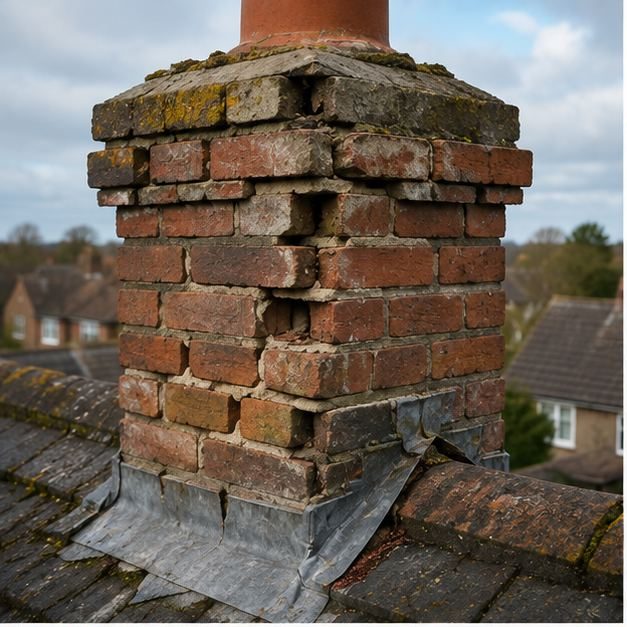
Soakers are one of the clearest examples of this difference. On a slate roof, individual lead soakers are typically woven between each course of slate as it is laid, interlocking with the material in a way that follows the roof's construction rather than sitting on top of it. This gives a genuinely weathertight result when done properly, but it does mean that leadwork around a chimney on a slate roof cannot always be replaced in isolation without disturbing the slates immediately around it, unlike some tiled roof details that can be worked more independently. Getting the overlap and fall of each individual soaker correct matters more on slate than on many other roof coverings, since even a small misalignment can create a channel for water to track sideways rather than being shed cleanly downward.
The back gutter, positioned on the upslope side of a chimney where water naturally collects before it can run around the stack, is another detail that needs particular care on slate roofs. This gutter has to handle a genuinely significant volume of water during heavy rain, channelling it around the chimney rather than letting it pool or find its way underneath the slates, and any shortfall in its width or fall can lead to water backing up and finding a way in during exactly the kind of downpour it is meant to cope with.
Slate's rigidity also means that any leadwork replacement around a chimney needs to be done carefully to avoid cracking the surrounding slates, which are more brittle and less forgiving of being lifted or walked on repeatedly than modern concrete or clay tiles. This makes access and technique genuinely important on this type of roof, and it is one of the reasons leadwork on older slate properties in Bradley Stoke should be handled by someone experienced with the material specifically, rather than treated identically to a tiled roof job. Slate roofs are also more likely to be several decades old by the time leadwork needs attention, meaning the slates themselves may already be nearing the end of their working life, which is worth factoring into any repair decision.
Lead itself has a long service life when properly detailed, but flashing, soakers and back gutters can still fail through age, thermal movement, or storm damage regardless of how well they were originally installed. Signs to look for include damp patches in the loft near the chimney, staining on a chimney breast, or slates that appear disturbed around the stack's base.
If your Bradley Stoke property has a slate roof and you are concerned about the leadwork around the chimney, Brunel Roofing Bristol can inspect it free of charge and carry out repairs suited specifically to slate construction, backed by a 15-year guarantee.
Get a Free Quote for Chimney Repairs in Bradley Stoke
Every chimney is different — the fastest way to get an accurate answer is a quick chat with our team.