
The complex rooflines typical of Clifton's period properties, often with multiple chimney stacks, dormers and abutments on a single roof, rely heavily on leadwork to stay watertight. Flashing, soakers and back gutters do the quiet, unglamorous job of directing water away from every junction where the roof covering meets brickwork, and on older roofs this lead is frequently original or at least several decades old, having quietly done its job long past when a modern material might have been expected to fail. Because these roofs were often built before modern breathable membranes and standardised detailing existed, the leadwork itself sometimes has to do more of the weatherproofing work than it would on a newer property.
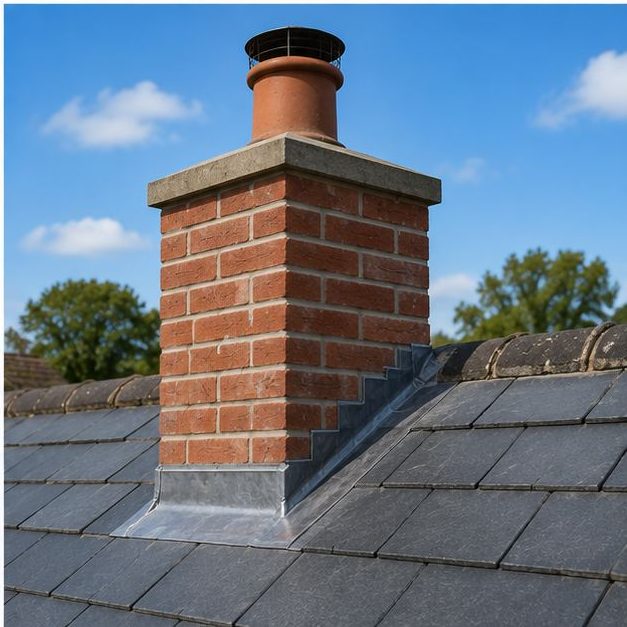
Flashing is the most visible element, dressed against the brickwork of the stack to stop water tracking down behind the tiles or slates. Soakers work less obviously, tucked individually under each course of roofing material along the sides of a chimney to guide water outward rather than letting it seep sideways into the roof structure. A back gutter, positioned on the upslope side of a chimney where water would otherwise pool, is often the hardest-working and least visible piece of leadwork on the whole roof, doing its job entirely out of sight. Understanding how these three elements interact is genuinely useful for homeowners trying to make sense of a survey report or a builder's recommendation, rather than treating leadwork as one single, undifferentiated repair item.
On Clifton's older stock, it's common to find that one of these elements has failed while the others remain sound, which is why a leak doesn't always mean the whole leadwork system needs replacing. A cracked back gutter, for instance, can cause a persistent leak even when the visible flashing around the stack looks perfectly intact, so proper diagnosis matters more than simply replacing whatever's easiest to see from a ladder without a closer look underneath.
Water ingress from failed leadwork rarely shows up directly under the fault. On a period property with deep roof timbers and multiple floors, a stain on a second-floor ceiling can originate from a chimney junction some distance away, having tracked along a rafter or run down inside a wall cavity before finding a way through the plaster, which often surprises homeowners expecting the source to be somewhere much more obvious.
Because scaffolding is usually necessary to safely access chimneys on Clifton's taller terraces, it's often sensible to have the full leadwork around a stack assessed at once, rather than fixing one element and discovering another has failed a year later once the access has already been taken down and a fresh set-up has to be arranged. A thorough inspection will typically also check how well the lead is fixed at its edges, since clips or dressing that have loosened over time can allow movement that eventually leads to cracking even in otherwise sound lead.
If you're dealing with a leak or simply want ageing leadwork checked before it becomes a problem, Brunel Roofing Bristol can inspect Clifton chimneys thoroughly and provide a free quote, backed by a 15-year guarantee on completed repairs.
Get a Free Quote for Chimney Repairs in Clifton
Every chimney is different — the fastest way to get an accurate answer is a quick chat with our team.