
Coastal weather asks more of lead flashing than most homeowners realise. On a Portishead property, the flashing that seals the junction between a chimney and the surrounding roof tiles is exposed to stronger, more frequent wind and driving rain than the same component would face further inland, and over time this extra exposure tends to show up as earlier wear and more frequent leaks if the leadwork is not checked periodically by someone who knows what to look for. It is one of the clearest examples of how location genuinely changes the maintenance a roof needs, rather than every property following the same generic schedule.
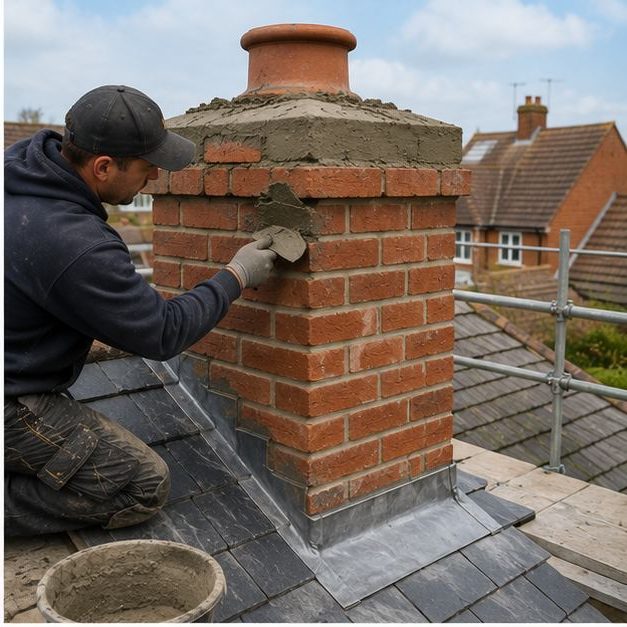
The system itself is made up of several parts working together: stepped flashing dressed into the mortar joints of the brick, soakers fitted beneath the roof tiles at each course to carry water away from the stack, and often a back gutter positioned above the chimney to divert water around it. In a wind-driven rain event, rather than a straightforward vertical downpour, water can be forced sideways into gaps that would stay dry in calmer conditions, which is part of why coastal properties tend to reveal flashing weaknesses that inland roofs might not show for years to come. Even a fractionally lifted edge of lead, barely noticeable on a still day, can be enough for wind-driven rain to exploit during a genuine storm.
Diagnosing a leak traced to leadwork means understanding that the damp patch that eventually appears indoors is not necessarily right below the point of failure. Water can track along a rafter or down inside a chimney breast before showing up as staining some distance away, particularly when wind is driving rain in from a specific angle rather than falling straight down onto the roof, so a proper inspection traces the actual entry point rather than guessing from the visible damage alone. Checking during or shortly after a spell of wind and rain, rather than only on a calm, dry day, can make the actual entry point far easier to identify.
Repairing failed flashing involves removing the damaged lead and dressing new sections into a properly re-cut mortar joint, work that requires scaffold access on the taller properties common around Portishead, both for safety in what can be a genuinely windy working environment and to allow the lead to be dressed accurately rather than hurried, since a rushed repair on an exposed stack tends to fail again sooner than the same shortcut would inland.
Given the additional wear that coastal exposure brings, it is worth having leadwork checked a little more regularly here than the standard interval recommended for more sheltered inland properties, particularly ahead of the winter storm season when wind-driven rain is at its very worst along the estuary, when a fault that has gone unnoticed all summer can suddenly become a genuine problem indoors.
If you have noticed damp near a chimney breast, or simply want your flashing checked before the next storm, Brunel Roofing Bristol offers free inspections across Portishead and a 24-hour emergency call-out for anything that cannot wait for a routine appointment.
Get a Free Quote for Chimney Repairs in Portishead
Every chimney is different — the fastest way to get an accurate answer is a quick chat with our team.