
A stain on the ceiling near a chimney breast is one of the more unsettling things a homeowner in Old Market can find, not least because the source is rarely obvious from where the damage appears. Chimneys are involved in a surprising number of roof leaks, simply because there are so many junctions, materials, and ageing components clustered in one relatively small area of the roof, each one a potential point of failure on its own. Understanding this before jumping to conclusions about the cause is often the difference between a repair that works first time and one that does not.
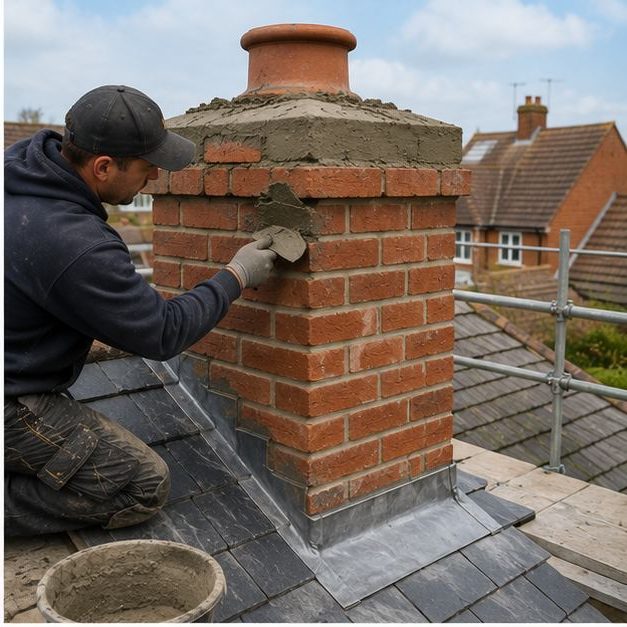
The starting point for any proper leak investigation is understanding that water does not necessarily travel straight down. It can enter through a crack in the flaunching at the very top of the stack, track down inside the brickwork, and emerge as a damp patch on a wall or ceiling some distance from where it actually got in. Equally, a failure in the lead flashing where the chimney meets the roof can send water along a rafter before it drips down somewhere else entirely. Chasing the visible symptom without tracing the actual route is a common reason repairs sometimes fail to solve the problem first time round.
On older buildings, which make up a significant part of Old Market's housing, there are more potential points of failure to consider than on a newer property. Ageing mortar, historic repairs of varying quality, softer original brick, and lead flashing that may be decades old all need to be checked as part of a thorough investigation, rather than assuming the newest-looking repair is automatically the source of the problem at hand. A methodical, process-of-elimination approach tends to get to the truth faster than guesswork, even if it takes a little longer at the inspection stage itself.
A proper inspection typically starts at the top of the stack, checking the flaunching and pots, before working down through the brickwork and mortar joints, and finally checking the lead flashing, soakers, and any back gutter where the chimney meets the roof structure below. Weather conditions at the time of inspection can also matter, since some leaks only show themselves during wind-driven rain from a particular direction, which a dry-day inspection alone might well miss entirely.
Once the actual source is identified, the repair itself is usually far more targeted and cost-effective than a guess-and-patch approach, which can end up covering several possible causes unnecessarily, or worse, missing the real one and leaving the leak to continue unresolved for another season.
If you are dealing with a persistent or intermittent leak near a chimney in your Old Market home, it is worth having it properly traced rather than repeatedly patching the most obvious spot. Brunel Roofing Bristol offers free inspections and will identify exactly where water is getting in before recommending any repair, with every job backed by a 15-year guarantee once the work is complete.
Get a Free Quote for Chimney Repairs in Old Market
Every chimney is different — the fastest way to get an accurate answer is a quick chat with our team.