
Chimney pots do a small but important job: they extend the flue above the stack, help draw smoke and gases away from the roof, and reduce the chance of down-draughts in windy weather. They're also one of the more exposed elements of a chimney, sitting right at the top of the structure, which means they're often the first thing to show visible damage.
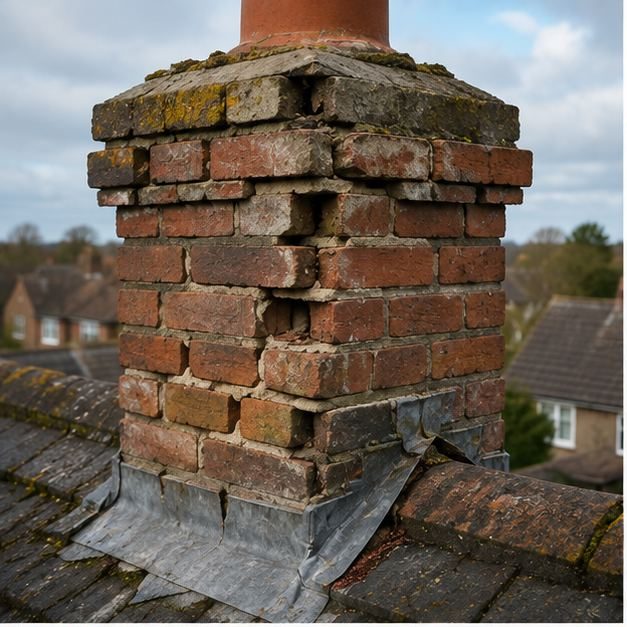
Hairline cracks in a pot are common and don't always mean immediate replacement, particularly if they're stable and not letting water track down into the flaunching below. What tips a pot from repairable to replaceable is usually a crack that's widening, a section that's chipped away, or a pot that's visibly leaning or loose in its setting. A leaning pot is a particular concern, since it can mean the flaunching holding it in place has failed rather than the pot itself simply being old.
Age and material matter too. Older clay pots on period properties in Ashley Down can be original to the house, and while that's often a nice feature worth preserving where possible, decades of frost exposure eventually take their toll. Where a pot is beyond safe repair, matching the replacement to the property's style, in terms of height, shape and finish, keeps the roofline looking consistent rather than mismatched.
A damaged pot left unaddressed rarely stays a small problem. Cracks let water into the flaunching and brickwork below, a leaning pot can eventually become unstable in high winds, and in some cases a badly cracked pot can affect how well a flue draws, particularly for chimneys still in active use with an open fire or stove. It's a relatively small repair by cost, but one that's worth not putting off.
If a pot is being replaced anyway, it's also a sensible moment to consider whether a cowl would help, whether that's a simple rain guard for a disused flue or a bird guard for one that's had nesting problems in the past, since fitting one alongside a new pot avoids a separate visit later for what's a relatively quick addition. Where a stack has more than one pot, serving multiple flues from what were originally separate fireplaces, it's worth having them all assessed together rather than one at a time as each fails. Pots of a similar age tend to reach the end of their life around the same period, and replacing them as a set during one visit is usually more cost-effective than repeat call-outs for each one individually as it fails.
If you've noticed a pot that looks cracked, tilted or missing entirely, it's worth having it assessed alongside the rest of the stack, since problems at the top of a chimney often relate to what's happening at flaunching or flashing level too. We carry out free inspections across Ashley Down and can usually replace a damaged pot as part of the same visit.
Get a Free Quote for Chimney Repairs in Ashley Down
Every chimney is different — the fastest way to get an accurate answer is a quick chat with our team.