
Chimneys in Patchway cover a wide range of ages and construction types, from older brick terraces to the post-war and more recent housing that makes up much of the area, and the problems that show up tend to follow a fairly predictable pattern regardless of which category a particular property falls into. Knowing what these common issues look like makes it easier to spot trouble early, before a small repair turns into a bigger and more disruptive one. A quick visual check from the garden every so often, looking for anything obviously out of place at the top of the stack, costs nothing and can flag a problem long before it becomes serious.
Mortar failure is probably the most frequent issue found on inspection. Joints between bricks weather and crumble over time, especially on a structure as exposed as a chimney stack, and once mortar starts receding, rainwater can penetrate further into the brickwork than it should. Left unaddressed, this generally leads to spalling, where the face of individual bricks cracks and breaks away after repeated freezing and thawing of trapped moisture over successive winters. Once this cycle starts, it tends to accelerate rather than plateau, since damaged brick absorbs even more water than sound brick did originally.
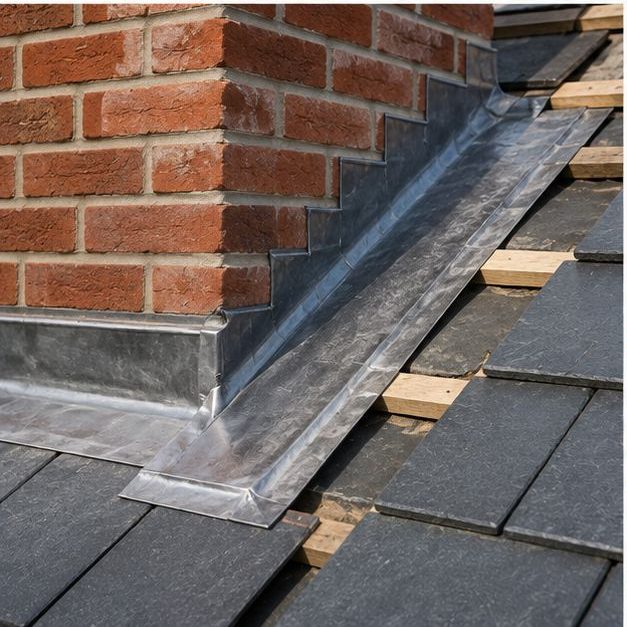
Lead flashing problems are another common finding, particularly on properties where the flashing has not been checked in many years. Cracked or lifted lead at the junction between chimney and roof tiles is one of the more common causes of leaks traced back to a chimney, and because water does not always travel straight down from the point of entry, a leak showing up as a stain on a bedroom ceiling can sometimes originate from flashing several feet away from that spot. This is one of the more common reasons a first attempted repair does not actually stop the leak, since the wrong area was treated in the first place.
Damaged or missing flaunching, the mortar fillet that seats the pots at the top of the stack, is also a frequent finding, particularly on chimneys that have gone many years without any maintenance. Once this fails, pots can start to lean or let water track down inside them, and on properties where the chimney is no longer in active use, an unmanaged flue can develop condensation and damp problems even without any external water ingress at all taking place. This is a detail that surprises many homeowners, who naturally assume a disused chimney is the one part of the roof that no longer needs any attention whatsoever.
The good news is that most of these issues, caught reasonably early, are straightforward and comparatively affordable to fix. It is really only once problems have been left for years that they compound into something more significant, such as a partial or full stack rebuild, which is why a periodic check of a chimney's condition is worth doing even when there is no obvious sign of a problem yet visible from the ground. A short inspection every few years is a small investment compared with the cost of a rebuild that could have been avoided altogether with earlier attention.
If it has been some time since your chimney in Patchway was last inspected, or you have noticed any of the signs mentioned here, Brunel Roofing Bristol offers free, no-obligation inspections and can advise honestly on what, if anything, needs doing.
Get a Free Quote for Chimney Repairs in Patchway
Every chimney is different — the fastest way to get an accurate answer is a quick chat with our team.