
Mortar is doing more work on a chimney stack than most homeowners realise. It's not just holding the bricks together, it's also the first line of defence against wind-driven rain, and on an exposed stack above the rest of the roofline, it takes a battering that brickwork lower down the house rarely experiences. Knowing when that mortar has reached the end of its life is the difference between a straightforward repointing job and a much larger repair further down the line.
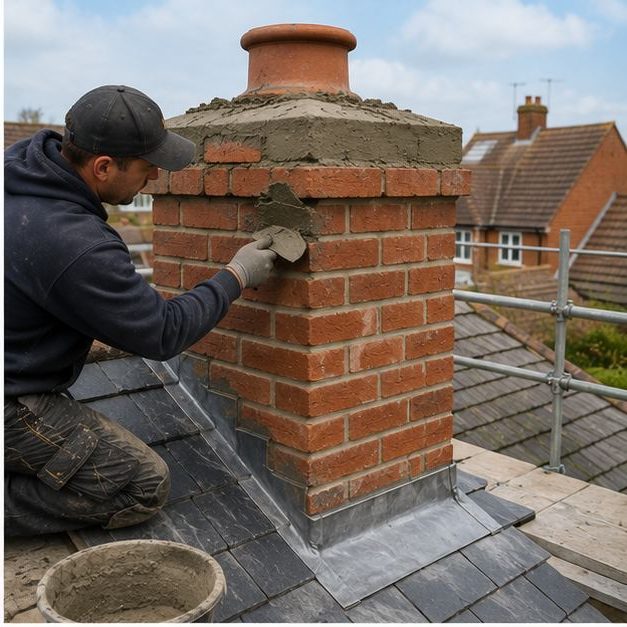
The clearest sign is mortar that has visibly receded from between the bricks, sometimes by a centimetre or more, leaving joints that look raked out and shadowed rather than flush. Run a finger along it and if it crumbles or comes away as dust, it has lost the bond that keeps water out. On older properties around Arnos Vale, particularly Victorian terraces, this recession often happens gradually over decades and gets noticed only once it's fairly advanced.
Other signs include hairline cracks running through the mortar joints, small tufts of moss or vegetation taking hold in the gaps, and damp patches appearing on chimney breasts inside the house, which often trace back to failed pointing letting water track down through the stack. None of these are dramatic on their own, but together they indicate mortar that's no longer doing its job.
Getting the mortar mix right matters as much as the timing. Many older properties in Arnos Vale were originally built with lime mortar, which is softer and more breathable than modern cement mixes. Repointing a period chimney with the wrong, overly hard mortar can actually accelerate damage, because it forces moisture to escape through the brick faces instead of the joints, leading to spalling. A repair should match what the chimney was originally built with, not just whatever's quickest to apply.
It's also worth not confusing every visual change with a genuine need for repointing. A build-up of algae or moss on the mortar surface, common on shaded, north-facing stacks, is often a cosmetic issue rather than a sign the pointing has actually failed structurally. A proper inspection distinguishes between mortar that simply looks weathered and mortar that has genuinely lost its bond and needs replacing. Properly done, repointing means raking out old mortar to a sufficient depth, not just skimming over the surface, so the new mortar has something solid to key into. It's then packed in and finished to match the surrounding joints, and given time to cure properly before it's exposed to heavy weather. Rushed repointing, raked out too shallow or finished too quickly, tends to fail again within a couple of years, which is often why a chimney can look freshly pointed yet still be letting water in.
Left too long, failed pointing stops being a simple repointing job and starts contributing to loose brickwork, water ingress, and eventually the kind of structural movement that calls for a partial or full rebuild instead. If your chimney's mortar is looking tired, it's worth having it assessed while repointing is still the answer. We offer free inspections across Arnos Vale and can advise honestly on whether repointing will do the job or something more is needed.
Get a Free Quote for Chimney Repairs in Arnos Vale
Every chimney is different — the fastest way to get an accurate answer is a quick chat with our team.