
Chimneys tend to deteriorate slowly, which is part of why problems often go unnoticed until they've become significant. Catching the early signs from ground level, or from inside the loft, can turn what would eventually be an expensive rebuild into a straightforward repair. Here's what's worth keeping an eye on if you've got an older stack on your property in Arnos Vale.
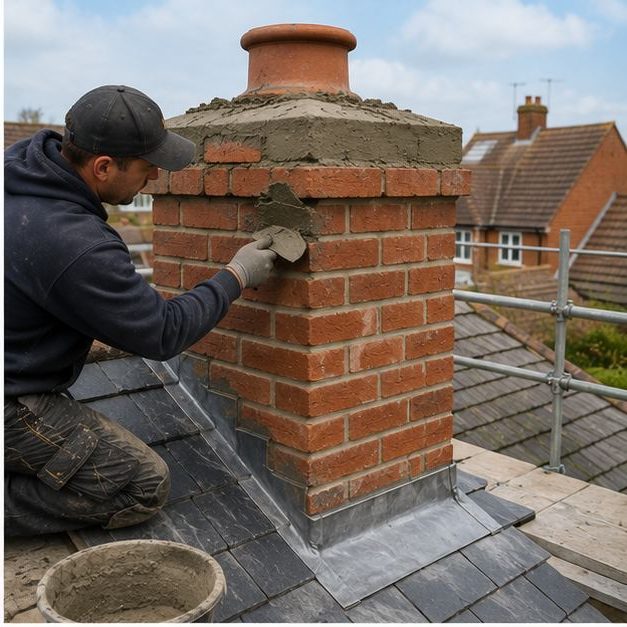
Start with what's visible from the garden or street. Mortar joints that look dark, recessed or crumbly rather than flush and consistent are usually the earliest sign of trouble. A stack that appears to lean, even slightly, compared to how it did a few years ago is worth taking seriously and getting checked, since chimneys are tall, heavy structures and movement doesn't correct itself.
Debris is another useful indicator. Small pieces of mortar or brick fragments found in the fireplace, on the roof, or in gutters below the chimney line suggest the stack is shedding material, which is rarely a good sign even if the pieces themselves look small. Similarly, a chimney pot that looks tilted or cracked, or is missing its cowl if one was originally fitted, should be looked at before winter weather makes the job more urgent.
Inside the house, damp patches on a chimney breast, a musty smell in a loft near the stack, or staining on ceilings close to where the chimney passes through the roof are all signs that water is getting in somewhere along the way. On the taller period stacks found on some of the older terraces in Arnos Vale, these signs can take a while to appear even after a leak has started, simply because there's more structure for water to travel through first.
As a general habit, it's worth giving a chimney a visual once-over after any particularly severe storm, in addition to a more thorough annual check, since high winds can accelerate wear that would otherwise have taken years to become noticeable. It's not necessary, or particularly safe, to climb up and inspect a chimney closely yourself. A decent pair of binoculars from the garden, or simply a careful look from an upstairs window, is usually enough to spot the more obvious signs of leaning, missing mortar or damaged pots. Anything that needs a closer look is best left to someone with the right access equipment and experience working at that height. It's also worth keeping a rough mental note of how a chimney looked the last time you paid it any attention, whether that was during a previous roof job or simply a passing glance a year or two ago, since gradual change is much easier to spot as a comparison over time than as a single snapshot.
None of these signs on their own necessarily mean urgent work is needed, but together they're worth acting on before the next round of winter weather. If you've spotted any of them, a free inspection will tell you exactly what's happening and what, if anything, needs doing. For anything that looks urgent or storm-related, we also offer a 24-hour emergency call-out.
Get a Free Quote for Chimney Repairs in Arnos Vale
Every chimney is different — the fastest way to get an accurate answer is a quick chat with our team.