Flat roofs on Pucklechurch cottages and extensions
Older stone and brick cottages in the village rarely began with flat roofs, so what you see is usually a later extension built against a thick old wall. The junction where the flat roof meets that stone or brick is a classic weak point, and it is where we look first. That keeps the work in proportion to the problem.
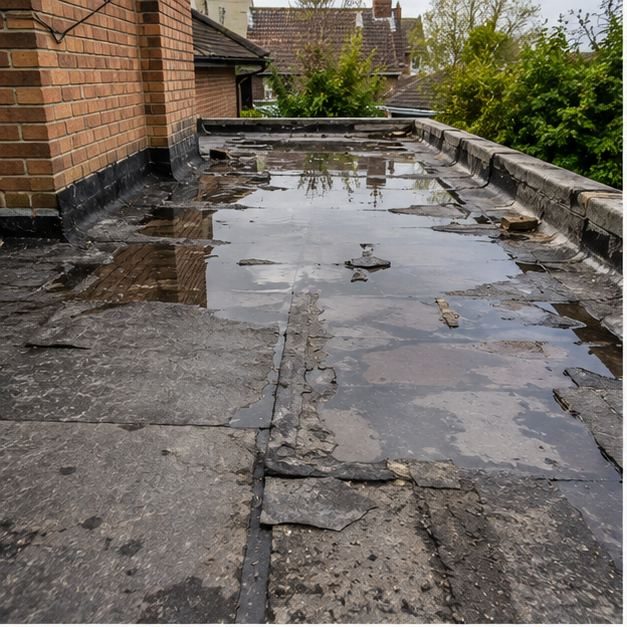
Many flat roofs here sit under trees or beside open fields at the village edge. Leaves block outlets and gutters, water collects, and wind from open ground can lift loose edge trims. A little standing water becomes a larger problem once it finds a seam. A quick look rarely tells the whole story. Each house is different, so we check yours properly.
Later infill houses have their own porch and garage roofs, usually simpler in shape. Even so, a small flat roof can hide a soft deck beneath a sound-looking surface, so we check the boards and insulation underneath as well as the covering on top. Photographs help you see what is under the covering. You get a straight answer, not a sales pitch.
Flat roofing work we carry out in Pucklechurch
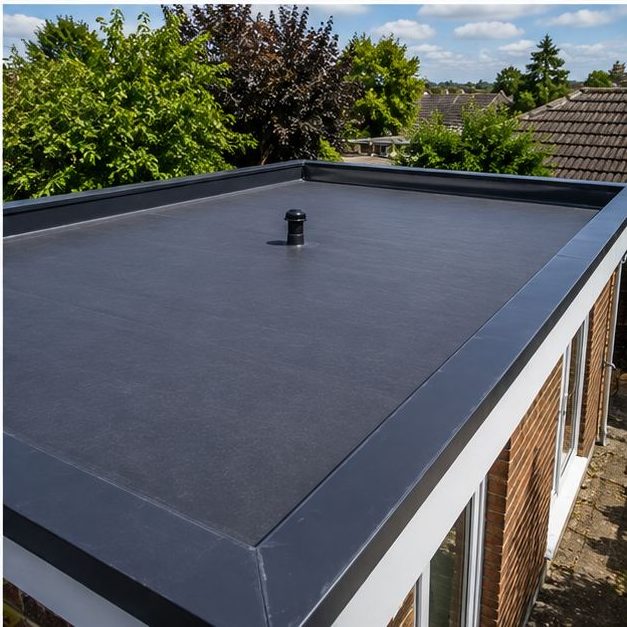
- Cottage extension roofs. Flat roofs on rear and side extensions are repaired or renewed, with the junction to the old wall carefully detailed to keep water out.
- Garage and outbuilding roofs. Detached and attached garages and outbuildings are covered and repaired, including edges, trims and outlets.
- Ponding and blocked outlets. We clear and correct outlets and look at falls where water is sitting, since standing water shortens the life of any covering.
- Cracks, splits and blisters. Damaged covering is repaired where the roof is otherwise sound, and we are clear when damage is too widespread for repair.
- Upstands and abutments. Where the roof meets stone, brick or render, the upstand and flashing are reformed so the junction is sealed properly.
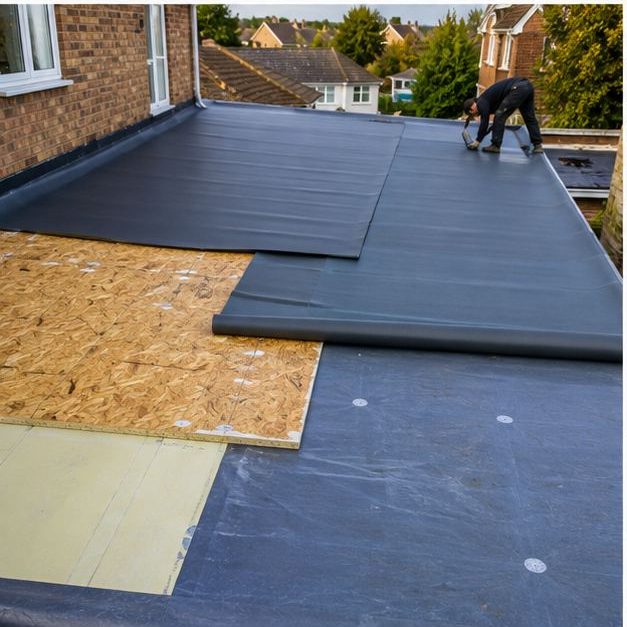
- Full replacement with new deck. Where the covering has failed widely, we strip back, renew rotten boards, add insulation and lay a new waterproof system.
How we handle flat roofs in Pucklechurch
We start by finding out how the roof is built: what the covering is, what lies beneath and how the water drains away. From inside the room we look for stains and soft spots, then we examine the surface, edges and the junctions with the house. That is where most leaks on small roofs begin.
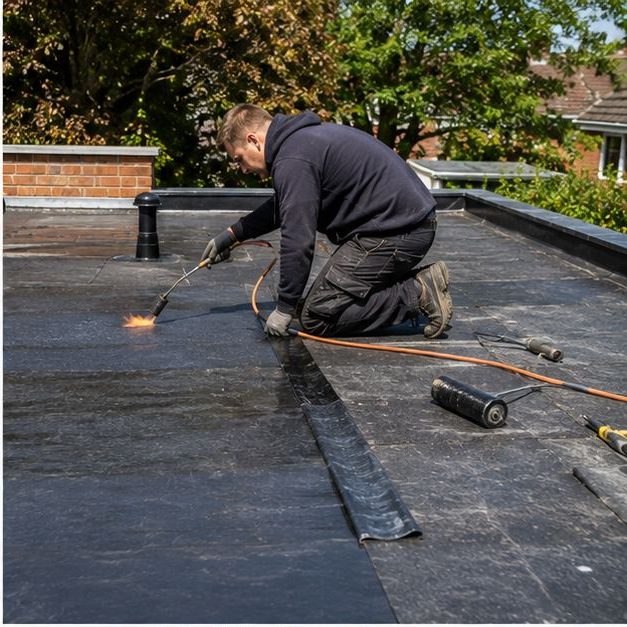
If the deck is dry and the damage is local, a repair makes sense. If the boards are soft or water has spread through the insulation, we explain why replacement is the sounder choice and talk through materials such as single-ply rubber, fibreglass and felt. The extra check is worth the time.