
Terraces, semis and extensions each need a different roof treatment. The right choice follows the age of the house and the shape of the roof, not a standard package.
Ashley Down is mostly rows of Victorian and Edwardian terraces and inter-war semis, with bay fronts and rear extensions added over time. Each part of a house can need a different roofing approach. Choosing well means looking at the whole building, what is already there, and what the roof has to do.
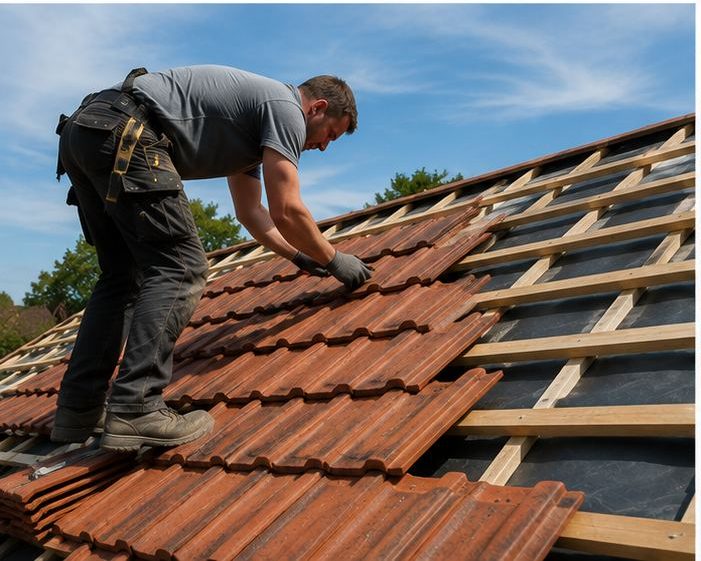
The main pitched roof
Most houses here have a pitched roof in slate or tile. Where the covering is still sound, repairs to tiles, ridge and lead may be all it needs. Where it has failed across wide areas, re-roofing with a similar covering keeps the street looking consistent and often suits the structure underneath. The existing timbers, battens and felt need checking before anything new goes on, since a new covering is only as good as what carries it.
Bays, porches and extensions
Bay-fronted terraces have small roofs of their own, often with lead or a short pitched section, and rear extensions usually have flat roofs. These are where water tends to find a way in, particularly at the junction with the old wall. Each should be treated as part of the whole system, not as a separate afterthought. A flat extension suits single-ply rubber, fibreglass or felt systems, chosen for the shape and details.
- Pitched covering on the main roof
- Lead work at bays and abutments
- Flat roofing on extensions and porches
- Gutters and fascias along every edge
Terraced and semi-detached specifics
Terraces share party walls and often gutters, so a repair on one house affects the next. We look at where the roofs meet, what needs coordinating with neighbours, and how access can be arranged. Inter-war semis often have hipped or gabled roofs with exposed edges, where the verge and ridge details matter. A dry verge can suit a gable, subject to the tile, and replaces mortar that tends to crack on exposed edges.
Edges, drainage and ventilation
Whatever the covering, the roof depends on its edges. Fascias, soffits and gutters carry the water away and keep the roof space ventilated. If these are tired, a new covering will not behave as it should. We look at the whole system, from ridge to gutter, and explain what is urgent and what can wait.
How to decide
Start with an inspection, then ask for a written description of options and what each means for the edges and junctions. Ask why a covering is recommended, not just what it is. We aim to give you a plain account, with photographs, so the choice is yours and you understand what each route involves. Some work may need planning or Building Regulations checks, and we advise before work starts.
Frequently Asked Questions
Should a re-roof use the same tiles as before?
Often yes, particularly on terraces where uniformity matters and the roof structure was designed for that covering. A different covering may be chosen where the structure or condition justifies it, and we explain the reasoning before work begins.
Can the flat extension roof be done at the same time as the main roof?
Yes, and it often makes sense, since the junctions between flat and pitched sections can be sorted properly in a single programme of work with shared access, rather than each being repaired separately at different times.
How do I know if my roof needs a repair or a replacement?
It depends on how widespread the problems are, the condition of the timbers and felt, and what the loft shows. We inspect, show you the evidence and give an honest view of both routes, including what is urgent and what can wait.
Talk to our team about general roofing services in Ashley Down
Every roof is different — the fastest way to get an accurate answer is a quick chat with our team.