
Different parts of a Brislington house call for different roofing. This guide walks through the pitched, flat and detail work that suits the typical homes here.
Brislington is mostly inter-war and post-war semis, with older village-core houses on the rising ground. Many have hipped roofs, plus a garage or extension tacked on. No single roofing type suits all of that, so the right choice comes from looking at each part of the roof and how it behaves.
The main pitched roof
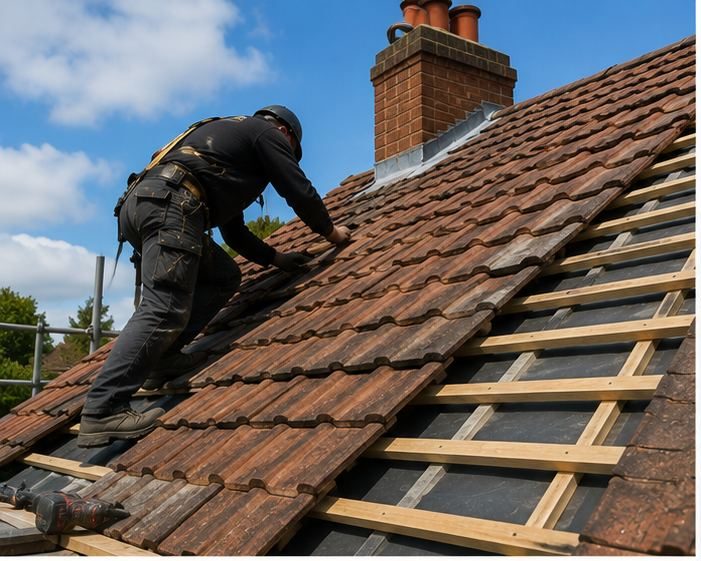
Most of the housing here has a pitched roof covered in tiles or slates. The question is rarely which material to choose from scratch; it is whether the existing covering is still sound or needs repair or replacement. We look at the whole slope, the battens and the underlay before advising, and match materials to what is already there. Matching what is there keeps the house looking right.
Hipped roofs and their joints
A hipped roof has sloping ends instead of gable walls, which gives many corners and joints. Hip tiles, ridge bedding and the junctions between slopes are where problems start. We inspect these closely and pay attention to the flashings, because a roof can be mostly sound with one failed joint doing the damage. The hip ends deserve most of the attention.
Garages, extensions and porches
These parts are often flat or low-pitched, and the right system depends on the shape, access and how it is used. Single-ply rubber, fibreglass and felt systems each suit different jobs. Edges, upstands and the wall junction need as much attention as the covering. We explain what we would use and why. Falls and drainage matter as much as the material chosen.
- Rubber for large, simple roof areas
- Fibreglass for small or awkward shapes
- Felt systems where they suit the structure
- Proper falls so water runs away
Edges, gutters and the roofline
The roof edge is where wet gets in. Fascias, soffits, gutters and verges all contribute to how the roof copes with weather. On older houses, we check the materials of existing boards before touching them. UPVC is a very low maintenance option for the roofline, and dry verges tidy up gable edges. Gutters that overflow can undo good roofing quickly.
How we help you choose
We look at the roof as a whole, then explain what is urgent and what can wait. That might be a repair now and a larger job later. We give a written description of the work, explain access and tell you honestly if the lower-priced option will not last. Planning or Building Regulations checks may apply, and we advise before work starts.
Frequently Asked Questions
Do I need to replace my whole roof?
Not necessarily. Many roofs need targeted repairs at the ridge, flashings or a few tiles. We look at the whole covering and tell you whether repair is enough or whether the roof is worn throughout. A full replacement is only worth it when the whole covering is worn.
Which is better for an extension, flat roof or pitched?
It depends on the design, height and budget of the extension, but the covering and details matter more than the shape. A well detailed flat roof can perform well. We advise based on what is already built. The details at walls and edges matter most.
What should I expect from a roofing visit?
We look at the roof, loft and roofline, explain what we find in plain words and describe what we would do and in what order. You should come away knowing what is urgent, what can wait and how the work would be done. No pressure to decide on the spot.
Talk to our team about general roofing services in Brislington
Every roof is different — the fastest way to get an accurate answer is a quick chat with our team.