
The right roof depends on the age and shape of the house, how exposed it is and what is already there. Here is how we think about roofing choices for cottages and homes in Pucklechurch.
Pucklechurch has older stone and brick cottages and village houses around the centre, with later infill and open countryside at the edges. Each type of house asks for something different from its roof, and the best choice depends on the building, not on a fixed preference.
Read the existing roof
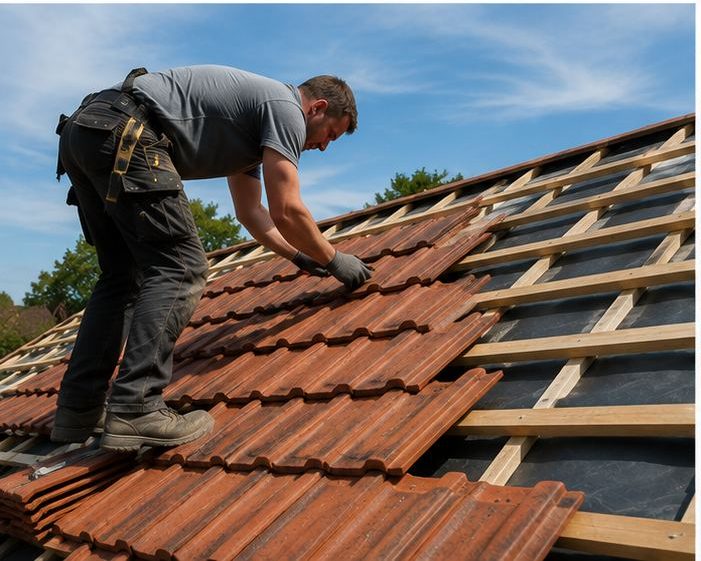
The first clue is what is there already. The covering, the pitch and the way the roof meets walls and chimneys all say something. We look at how well it has performed, how it has been repaired and whether the structure beneath is sound. A good choice builds on that.
Past repairs show up as patches of different colour or age. A roof that has had many small fixes may be telling you that a full re-roof of that slope is a better use of money than yet another patch. We would rather say so than quote another patch.
Older cottages and village houses
On older homes, appearance and character matter, and the roof structure may be uneven. Natural-looking tiles or slate often suit best, laid carefully to follow the timbers. We pay attention to details such as ridge, hip and verge finishes, lead flashings and the way the roof meets old walls.
- Coverings chosen to suit the look of the building
- Lead flashings at chimneys and abutments
- Ridge and verge details suited to the tile
- Felt and battens checked or renewed during re-roofing
Later infill homes
Newer houses usually carry standard concrete tiles in even profiles. These are straightforward to repair or replace, and matching is easy. Dry verge systems, vented eaves and modern ridge fixings are common. The choice is more often about condition and performance than appearance.
Where infill houses sit close to older ones, matching colour and profile along a street can matter, so we think about how a new roof will look beside its neighbours as well as how it will perform. Consistency along a row of houses is worth a thought.
Flat roofs and extensions
Flat sections over extensions, garages, porches and dormers need a different covering. Single-ply rubber, fibreglass and felt systems all have their place. The shape, access, falls and edge details decide which fits best. We also look at insulation and drainage at the same time.
Open edges and sensible advice
On plots at the edge of the village, roofs can see more wind and weather. Fixing method, edge details and gutters matter more. We look at the whole roof, say what is urgent and what can wait, and describe the work in writing. Changes may need planning or Building Regulations checks — we advise before work starts.
We keep recommendations plain. If a repair is enough, we say so. If a roof is tired, we say that as well, and set out which jobs are urgent and which can wait for better weather. You then decide with the full picture in front of you.
Frequently Asked Questions
Should a new roof match the old one?
Not always, but matching generally looks best, especially on older houses and in a village street. If an exact match is no longer made, we discuss close alternatives and show you the differences. We explain our reasoning and the options.
Is tile or slate better?
Neither is better in every case. Slate often suits older buildings and a refined look, while tiles are easier to match on newer homes. Correct fixing and detailing matter more than the material on its own.
Can I mix pitched and flat roofs on one house?
Yes, many homes have both. The important part is the junction between them, which needs careful detailing. We look at the roofs together so water is shed properly where they meet. We explain how the two meet.
Talk to our team about general roofing services in Pucklechurch
Every roof is different — the fastest way to get an accurate answer is a quick chat with our team.