
Chimney leadwork is genuinely one of the more specialised parts of a roof, sealing the join between the chimney stack and the surrounding tiles or slates, and it is also one of the more common casualties of a serious storm. In Westbury-on-Trym, where many properties have tall period chimneys, this leadwork takes a great deal of wind pressure and can lift, tear or work loose without much warning, sometimes over the course of a single stormy night.
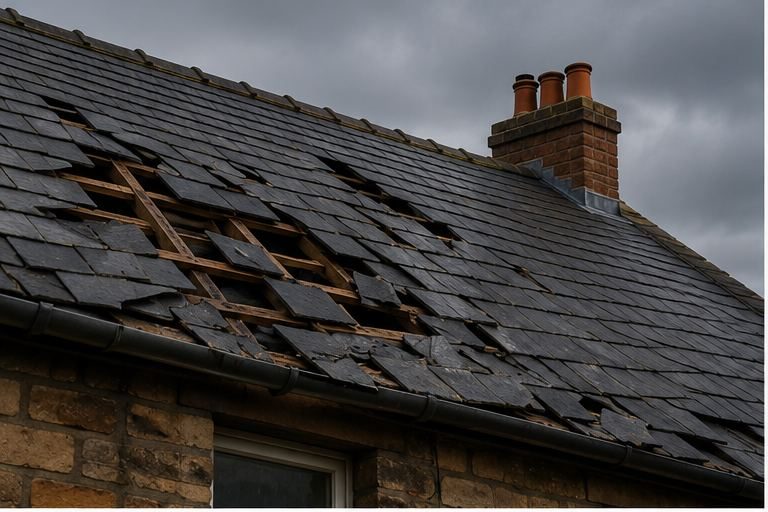
Lead is chosen specifically for this job because it can be shaped closely around the chimney and roof junction, but that same flexibility means it can also be physically bent or peeled back by sustained high winds, especially where it was fitted some years ago and has begun to fatigue. Once a section lifts even slightly, wind-driven rain gets behind it repeatedly, and the problem tends to escalate with each subsequent storm rather than staying static, widening the gap a little further each time.
Because the chimney sits at the very highest point of the entire roof, water that gets in around damaged leadwork can travel a surprising distance before it becomes visible inside the house, sometimes appearing as a stain on a bedroom ceiling well away from the chimney breast itself. This is a common source of confusion for homeowners trying to work out where a leak is actually coming from, and it is exactly the sort of tracing work an experienced roofer is used to doing.
Emergency leadwork repairs typically involve re-dressing or replacing the affected sections, checking the condition of the surrounding tiles and mortar, and making sure the whole junction is properly weathertight rather than just patched. A visual check alone is rarely enough here, since the true condition of ageing leadwork often only becomes clear once it can be examined closely and handled directly. Given the height involved, this is work that generally calls for scaffolding on Westbury-on-Trym's taller terraces and villas, rather than a ladder-based approach that would not allow a thorough enough repair. Where the surrounding lead is generally sound, a targeted repair to just the affected section is usually possible, rather than needing to replace the whole run, which helps keep the overall cost of the job proportionate to the actual damage.
Left unrepaired for any length of time, damaged chimney leadwork tends to let in progressively more water with every subsequent spell of rain, so it is worth treating as a priority once identified rather than something to revisit later in the year. Brunel Roofing Bristol provides emergency leadwork repairs with a 24-hour call-out, and all completed work carries a 15-year guarantee.
If you suspect your chimney leadwork has been damaged in recent storms, get in touch for a free inspection. We will trace the source of any leak properly and carry out a lasting repair rather than a temporary fix that only delays the problem.
Need Emergency Roof Repairs in Westbury-on-Trym?
Every case is different — the fastest way to get an accurate answer is a quick chat with our team.