
Flashing, the strips of lead or similar material used to seal the joins between different parts of a roof, is quietly one of the most important components in keeping a Patchway property watertight, and also one of the most vulnerable during a storm. Wherever a roof meets a chimney, a wall, a valley, or a rooflight, flashing is doing the job of sealing a junction that would otherwise be an obvious weak point in the roof's overall defence against the weather.
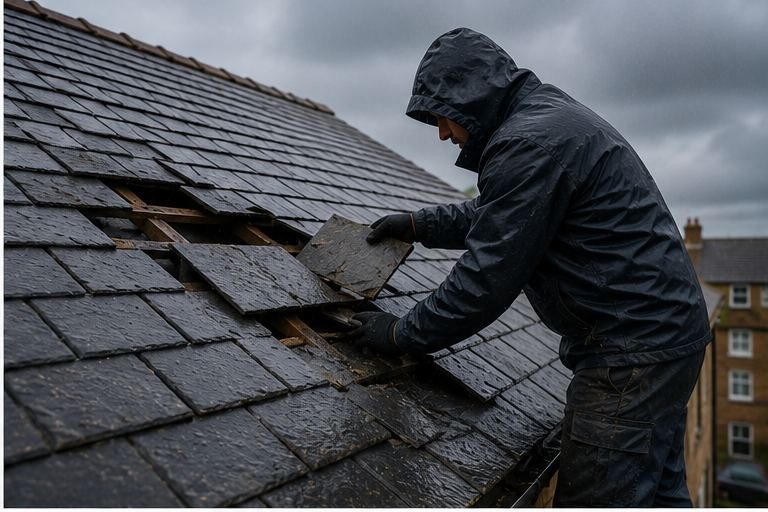
Strong wind can lift the edge of flashing that has come slightly loose over time, crack it at a joint under repeated flexing, or in more severe cases tear a section away entirely. Because flashing sits at these junctions rather than across the main roof surface, damage here can be surprisingly hard to spot from ground level, even though it may already be letting water in every time it rains, quietly causing damage out of sight.
The consequences of a flashing failure often show up somewhere other than directly beneath the damaged spot. Water entering at a chimney or valley can travel along roofing felt or a rafter before dripping through a ceiling some distance away, which can make the actual cause confusing to identify without inspecting the roof itself closely rather than just following the visible leak indoors.
Flashing around roof windows, soil vent pipes, and other penetrations through the roof surface is worth mentioning too, since these smaller details are just as capable of failing in a storm as flashing around a chimney, yet are often overlooked because they are less prominent. A dislodged collar around a vent pipe, for example, can let in a surprising amount of water for such a small component, and is easy to miss unless it is specifically checked. We make a point of covering every penetration through the roof surface during a flashing-related call-out, not just the specific spot originally reported, since one storm rarely damages only a single junction.
Our approach to emergency flashing repairs starts with identifying exactly where the failure is and how extensive it is, since a small lifted section might just need refitting and resealing properly, while flashing that has degraded more generally along its length is often better replaced outright to avoid repeated failures. Getting this right the first time matters, since a rushed sealant-only fix tends not to last against sustained weather and often needs revisiting within a year or two.
If you suspect flashing damage anywhere on your Patchway roof, whether around a chimney, a valley, or another junction, it is worth having it assessed properly rather than guessing. Our 24-hour emergency call-out and free inspections make it straightforward to get a clear answer, and all completed repairs carry a 15-year guarantee, so once fixed, that junction is genuinely off your list of worries.
Need Emergency Roof Repairs in Patchway?
Every case is different — the fastest way to get an accurate answer is a quick chat with our team.