
Lead flashing is the unsung hero of chimney weatherproofing, forming a flexible seal between the brickwork of a chimney stack and the roof covering around it. On Clifton's older properties, much of this leadwork has been in place for decades, and while lead itself is a genuinely long-lasting material, it can still be damaged by severe weather or simply weakened over time to the point where a storm finds the gap it has been waiting for, sometimes after years of otherwise reliable service.
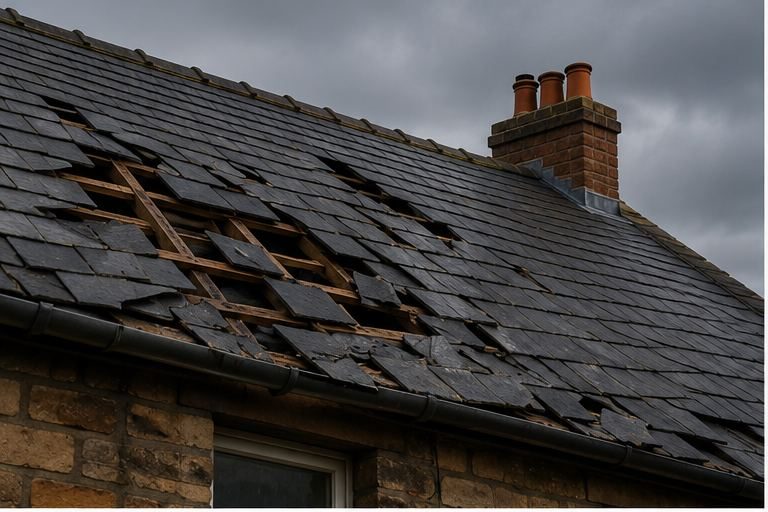
Wind is the main culprit when leadwork fails suddenly. Strong gusts can lift the edge of a flashing that has begun to work loose from its fixing, and once that edge is lifted even slightly, subsequent wind-driven rain can be forced underneath it rather than running harmlessly over the top. This is why chimney leaks often coincide with a particularly windy storm rather than simply a wet one, since it is the combination of wind direction and rain that tends to expose weak leadwork.
Cracked or split lead is another possibility, particularly on older leadwork that has become brittle with age, sometimes made worse by thermal movement as the metal expands and contracts through repeated weather cycles. Once a split appears, it rarely stays the same size, tending to widen gradually with each subsequent spell of bad weather until a proper repair is carried out. In some cases the underlying cause is simply that the original leadwork was undersized or thinner-gauge than ideal for the property's exposure, something a roofer will usually flag if it is found during a repair.
Emergency leadwork repairs typically involve carefully lifting and re-dressing the affected section, replacing it entirely where the material has genuinely reached the end of its life, and checking the surrounding pointing and brickwork for any related damage, since chimney problems on period properties often involve more than one issue at once. Given the height of many Clifton chimneys, safe access is essential, and proper equipment rather than a makeshift approach is the only sensible way to carry out this kind of work. Re-dressing lead correctly also means working it carefully around existing details rather than forcing a standard shape onto a chimney profile it was not designed for.
Because chimney leaks can allow water to track down inside the stack for some time before becoming visible as damp staining on a chimney breast, it is worth having leadwork checked even after a repair elsewhere on the roof has already been completed, just to rule out a second source. This is a small extra step that can save the frustration of a leak apparently returning shortly after what seemed like a successful repair.
Brunel Roofing Bristol carries out emergency leadwork repairs across Clifton, including full flashing replacement where needed, and can attend for a free inspection to confirm exactly where a chimney leak is originating before agreeing any work.
Need Emergency Roof Repairs in Clifton?
Every case is different — the fastest way to get an accurate answer is a quick chat with our team.