
The more junctions a roof has, the more places a storm has to exploit, and Sneyd Park is home to plenty of properties with genuinely complex rooflines, multiple hips and valleys, dormers, and sections built at different pitches or angles where they meet one another. Each of these junctions is a point where two roof surfaces or materials meet, and that's exactly where storm damage tends to concentrate rather than on a plain, uninterrupted slope with nothing to catch the wind. A roof with a single simple slope has comparatively few places for a storm to gain a foothold, whereas a roofline with several changes of direction offers far more opportunities for wind to find a weakness.
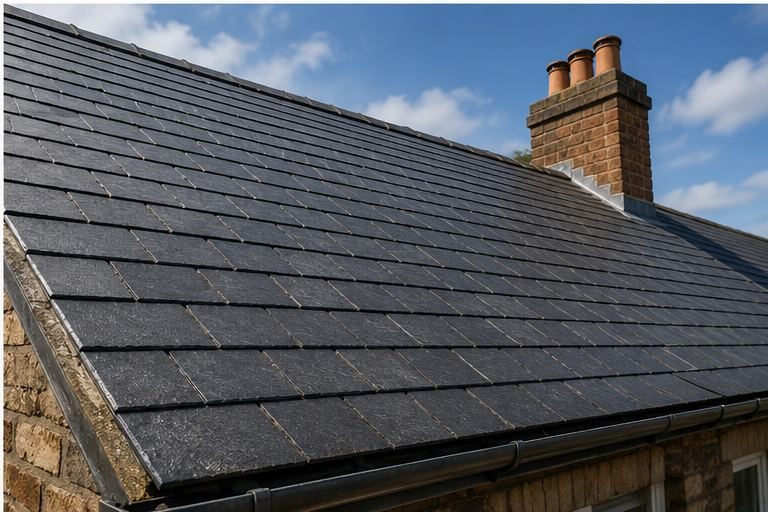
Valleys, where two roof slopes meet at an angle, carry a disproportionate amount of water off a roof during heavy rain, which makes any damage here particularly significant when it happens. A cracked or displaced valley tile, or lifted lead lining beneath, can let a surprising volume of water through during a storm, often well before the rest of the roof shows any sign of a problem elsewhere on the same property that same night. Because valleys sit at a natural low point on the roof, any debris carried by the storm, leaves, twigs, or grit, also tends to collect there, which can accelerate wear on the lining beneath it over time.
Hip roofs and dormer junctions bring similar issues. Wind pressure behaves differently around these more complicated shapes than it does on a simple gable roof, sometimes creating turbulence that puts extra strain on tiles and flashing near the junctions, which is part of why complex rooflines can suffer damage in slightly unpredictable places rather than following an obvious pattern from one storm to the next in the same spot. This unpredictability is part of why a generic checklist isn't always enough on these roofs, and why an experienced eye familiar with how wind actually behaves around complex shapes matters more here than on a simpler roof.
Assessing this kind of damage properly means checking every junction individually rather than assuming a fault in one valley means the others are fine, since storm force rarely distributes itself evenly across a roof with this much structural variation and history of alterations carried out over the years by different owners. It's also worth checking how different roof sections were tied together when any previous work was carried out, since a poorly executed junction from years ago can be a hidden weak point long before the current storm arrives.
Because complex rooflines often involve more leadwork, in valleys, around dormers, and at abutments, than a simpler roof, repairs frequently involve re-dressing or replacing lead alongside tile or slate work, rather than tile replacement on its own, which calls for a roofer comfortable working with both materials to a high standard. Getting this combination right protects not just the immediate area of damage but the performance of the whole roofline for years afterwards.
If your Sneyd Park property has a complex roofline that's been affected by recent storms, Brunel Roofing Bristol can carry out a full inspection covering every junction, with a free quote for any repair work identified along the way once the whole roof has been properly checked. A complex roofline rewards this kind of thorough, patient approach far more than a quick fix aimed only at the most obvious symptom.
Need Emergency Roof Repairs in Sneyd Park?
Every case is different — the fastest way to get an accurate answer is a quick chat with our team.