
The verge, where a roof slope meets the gable end of a house, is one of the more exposed edges of any pitched roof, and it's an area that takes a considerable amount of wind pressure during a storm. On properties across Lawrence Weston, verge damage is a common but sometimes overlooked consequence of severe weather, partly because it sits at the side of the roof rather than somewhere immediately obvious from the front of the house.
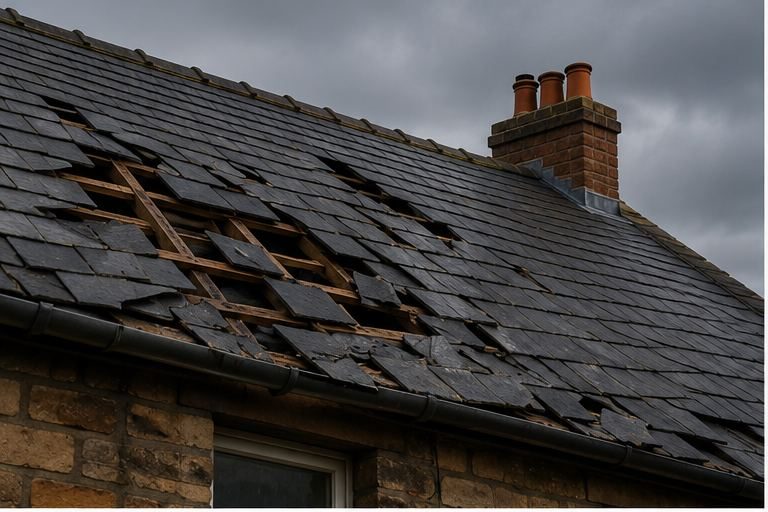
Wind can lift and crack the tiles or mortar bedding along a verge, and on roofs fitted with a dry verge system, it can dislodge the plastic or clay verge units themselves if they've come loose from their fixings. Either way, once the verge is compromised, wind-driven rain has a more direct route to get underneath the roof covering than it would through the main body of the tiled slope.
Verge damage doesn't always cause an immediate, obvious leak, which is part of why it can go unnoticed for a while. Instead it tends to develop gradually, with water working its way in a little further with each subsequent spell of bad weather, potentially affecting the timber battens and felt beneath the tiles along that edge of the roof before any staining shows up indoors.
A check after a storm is worth extending specifically to the verges rather than focusing only on the main tiled area, since damage here can be easy to miss from a casual look. Signs to watch for include tiles along the roof edge that look uneven or slightly lifted, or loose mortar debris found near the base of the wall below.
Properties with a dry verge system, which uses mechanical clips rather than traditional mortar bedding, generally cope a little better with high winds than older mortar-bedded verges, though even these systems can be damaged if a clip or unit has failed or wasn't fitted quite correctly in the first place. For Lawrence Weston homes with older, mortar-bedded verges, upgrading to a dry verge system during a repair is sometimes worth considering, since it can offer better long-term resistance to the kind of wind damage that keeps recurring on an older verge that's already shown itself to be vulnerable, without significantly changing the roof's appearance from the street. It's also worth having the roof timbers at the very edge of the verge checked once any damaged tiles or mortar have been removed, since prolonged minor exposure here can sometimes affect the timber fascia or barge board beneath before it becomes obvious from the covering alone. Catching this at the same time as the main verge repair avoids a second, separate problem emerging from the same original storm damage further down the line.
If you suspect verge damage on your Lawrence Weston property following recent high winds, it's worth having it checked before the next storm puts further strain on it. Brunel Roofing Bristol offers free inspections and can carry out verge repairs, including dry verge system work, with completed repairs covered by a 15-year guarantee.
Need Emergency Roof Repairs in Lawrence Weston?
Every case is different — the fastest way to get an accurate answer is a quick chat with our team.