Eaves boards on Nailsea's estate houses
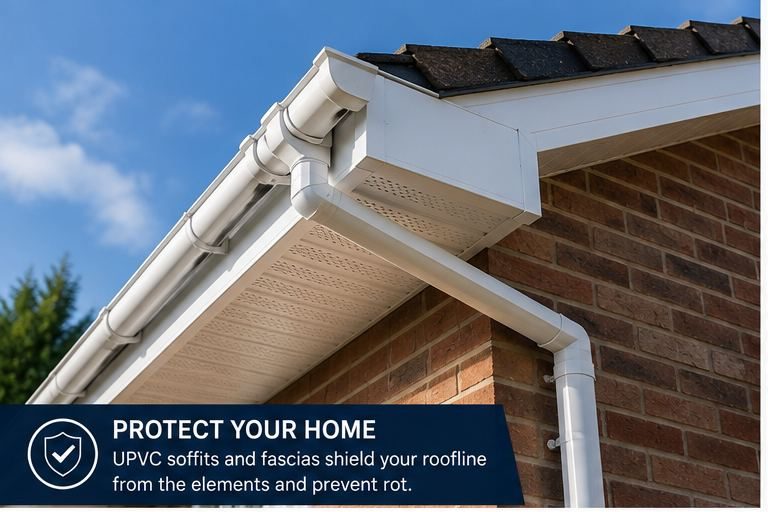
Nailsea's weather comes in from the west across open ground, so gutters take a beating and bargeboards at gable ends are hit by rain and wind from the side. When the gutter fails, water sits on the fascia and rots it, so we always look at both together. That is why the gutter and the board are best treated as a pair.
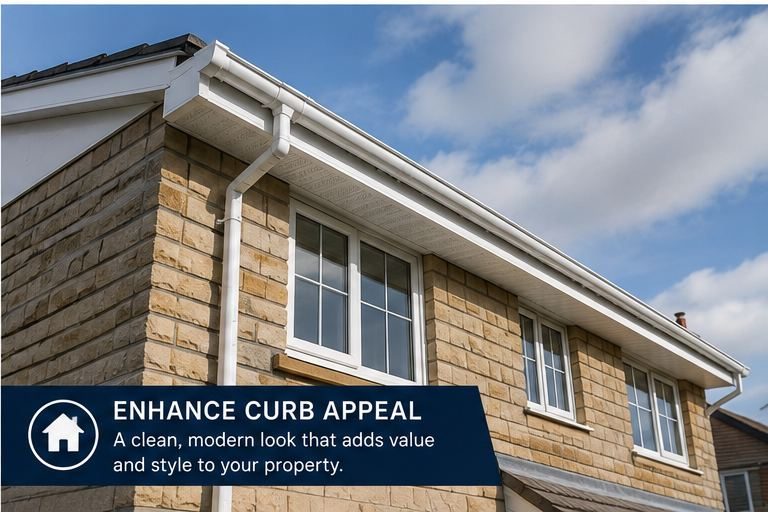
Estate houses tend to have long, straight eaves with a simple structure, which makes a full replacement quick to plan. Rows of similar homes mean a neat, matching finish is easy to achieve, and white remains the usual choice, though darker and wood-effect finishes are popular too. We bring samples or talk you through the finishes so the choice is easy.
Houses nearer the older core may have different eaves construction. We check what the existing soffit boards are made of before disturbing them, then carry on in the way that suits. Scaffold is normally needed, and on open plots it is usually straightforward to set up. Nothing is hidden behind the boards once we have looked.
Fascia and soffit work in Nailsea
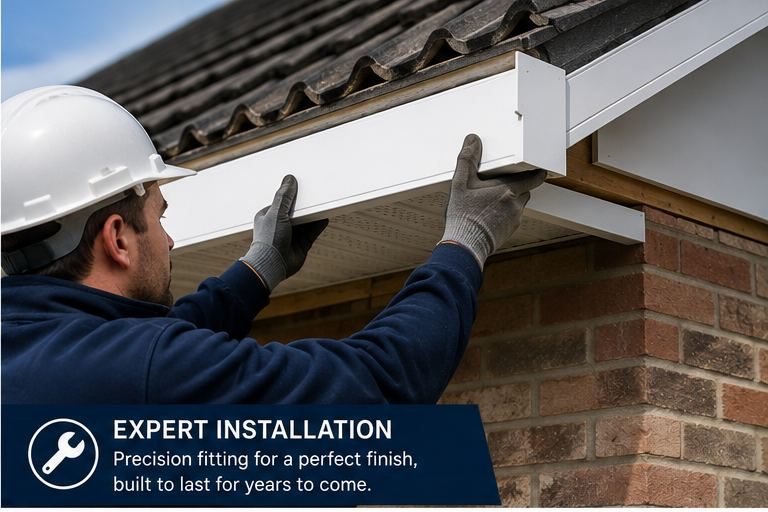
- Full fascia and soffit replacement. Removing old boards along the whole house, checking rafter ends and eaves, then fitting new UPVC fascias and soffits in one neat line.
- Bargeboard replacement. Renewing the boards along gable edges, which take the full force of westerly wind and rain on exposed estate roofs.
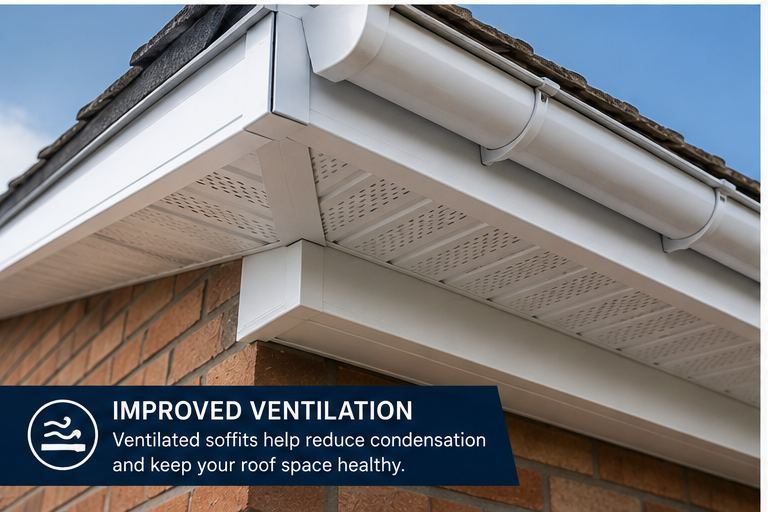
- Vented soffits and vent strips. Fitting vented soffit boards or vent strips so air moves through the roof space and condensation does not build up.
- New gutters with the boards. Fitting new gutters and downpipes alongside fresh fascias, so the old leaking joints are not simply refitted onto new boards.
- Capping over sound boards. Covering good existing boards with UPVC where they are sound, giving a clean finish with less disruption than full removal.
- Repairs and partial replacement. Replacing only the rotten lengths or damaged sections where the remaining boards are in good order.
How we approach eaves work in Nailsea
We begin with a walk round the house, looking at the boards from the ground, the gutters, and the places where water has been running down the wall. We then explain whether you need a full replacement, a partial one, or capping over sound boards. We do not rush the decision.
Once the old boards and gutters are removed, we check the rafter ends and the eaves for rot or damp, deal with anything we find, and fit the new boards and ventilation. You will know about the scaffold, the likely noise and how the work will be phased.