
Underlay technology has changed considerably since many of Clifton's older roofs were originally covered, and homeowners often ask whether modern membranes can be used beneath a traditional slate or tile finish without compromising the character of the roof. The good news is that in most cases they can, and doing so brings genuine performance benefits over the bitumen felt that was standard practice decades ago when many of these roofs were first laid.
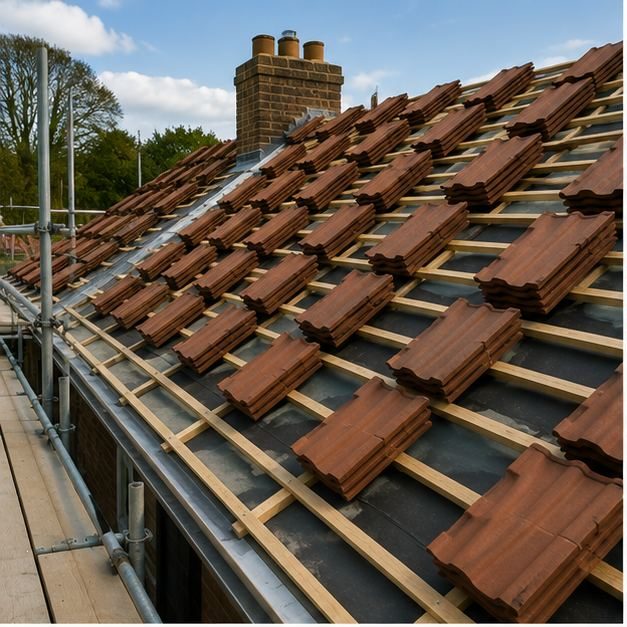
Modern breathable membranes are designed to let moisture vapour escape from the roof space while still keeping out wind-driven rain and the fine snow that can occasionally find its way under a traditional covering. On a period property where the roof structure itself is original, this improved airflow can help protect rafters, purlins and battens from the kind of damp-related decay that shortens a roof's working life and eventually leads to costly structural repairs alongside the re-covering work.
Because the membrane sits beneath the visible covering, it has no bearing on how the finished roof looks from the street, which means it's entirely possible to fit a modern underlay while still using natural slate or clay tile on top to preserve the traditional appearance that's so much a part of Clifton's character. The improvement is effectively invisible from the outside, benefiting the building's long-term condition without changing its outward appearance in any way that a passer-by, or a conservation officer, would ever notice.
That said, ventilation still needs to be considered as part of the wider roof design, not just the membrane choice in isolation. Older roof structures were often built with different airflow patterns than modern homes, so a competent installer will look at eaves ventilation, the loft space itself and any historic features such as exposed rafter feet or sarking boards to make sure the whole system works together rather than fitting a membrane on its own without regard for the rest of the build-up.
It's also worth discussing with your contractor how the membrane will be detailed around penetrations such as chimneys, roof lights or soil vent pipes, since these junctions are often where a poorly fitted membrane fails first. A membrane that's correctly lapped, taped and dressed at these points will perform far better over time than one that's simply rolled out and cut around obstacles as an afterthought.
For anyone considering loft insulation upgrades alongside a re-roof, a modern membrane can also make a genuine difference to how well the roof space copes with added insulation. Thicker insulation reduces heat loss into the loft, which in turn reduces the natural warmth that once helped keep timbers dry, so a properly specified breathable membrane becomes even more important once insulation levels are increased on an older Clifton property. Getting this pairing right at the same time, rather than treating insulation as a separate later project, tends to give a better long-term outcome for the roof as a whole.
If you're weighing up whether a membrane upgrade makes sense for your Clifton property, Brunel Roofing Bristol can assess your existing roof structure and explain how modern materials can be incorporated without affecting the traditional finish you want to keep.
Get a Free Quote for New Roof Installations in Clifton
Every roof is different — the fastest way to get an accurate answer is a quick chat with our team.