
A roof covered in moss can actually look reassuringly solid from the ground, a uniform green blanket that hides whatever is happening underneath. That is precisely the problem. In Ridgeway, as elsewhere, thick moss growth does not just sit harmlessly on top of the tiles, it can conceal genuine damage that has been developing for some time.
Cracked or slipped tiles are one of the most common issues moss can mask. A tile that has cracked under frost, or shifted slightly out of position, can be very hard to spot from the ground once moss has grown across and around it. The moss effectively camouflages the defect, so the roof continues to look fine even though water may already be finding its way in at that point.
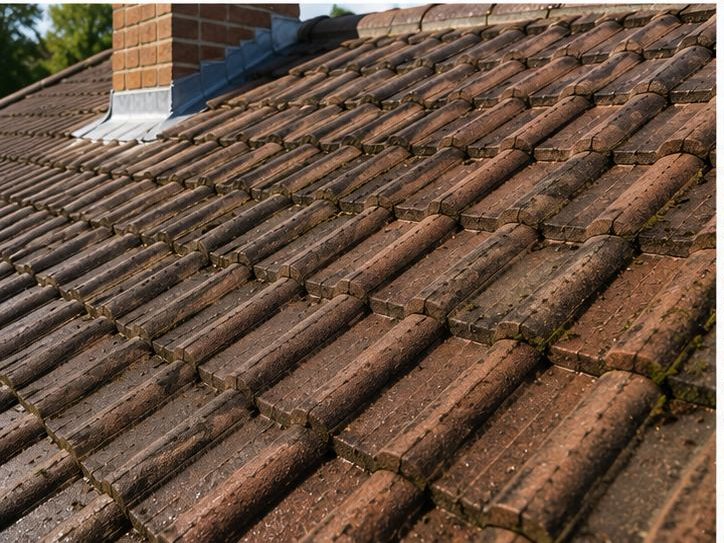
Mortar bedding around ridge tiles and verges is another area where moss causes trouble. Moss roots and rhizoids work their way into small gaps in ageing mortar, gradually widening them as the plant grows and as moisture freezes and expands in cold weather. On some of the older properties around Ridgeway, this kind of gradual mortar deterioration under a moss covering can go unnoticed for years.
Interlocking and plain tile roofs, both common across Ridgeway, can hide damage in slightly different ways. Interlocking tiles rely on a tight fit between neighbouring tiles, and moss growing into these joints can push tiles slightly apart without an obvious visual sign from a distance, while plain tiles overlapping in rows can develop gaps beneath moss clumps that are easier to miss entirely until the growth is cleared away.
Flashing around chimneys, valleys, and roof junctions can also suffer in silence beneath a build-up of moss and debris. These are the points on any roof most likely to leak, and if moss and trapped leaf litter are sitting against the flashing, it is difficult to properly inspect for lifting, corrosion, or gaps until that material is cleared away.
This is really the core argument for professional roof cleaning rather than simply leaving moss to accumulate, or trying to remove it yourself with a scraper from a ladder. When we clean a roof, we are not just improving its appearance, we are also getting a genuinely clear view of the tiles, mortar, and flashing underneath for the first time in years, often on Ridgeway roofs that have not had that kind of visual access since the moss first took hold.
Where cleaning does reveal a cracked tile, deteriorating mortar joint, or a flashing issue, we will point it out and explain what we are seeing, rather than simply cleaning around it and moving on. As a roofing contractor rather than a general exterior cleaning company, that kind of assessment is part of what we do, and it means small problems can be addressed while they are still small and inexpensive to fix.
It is worth adding that this is not simply a theoretical risk. On roofs across Ridgeway that have carried heavy moss for several years, it is genuinely common to find at least one or two areas of tile or mortar wear once the growth is cleared, particularly around ridge lines and valleys where moisture naturally collects. Homeowners are often surprised at how much a clean reveals, simply because there has been no real opportunity to see the roof clearly in a long time.
If you suspect your Ridgeway roof has been carrying moss for a while and you would like an honest look at what is underneath it, we would be glad to help. Get in touch with Brunel Roofing Bristol to arrange an assessment.
Get a Free Quote for Roof Cleaning in Ridgeway
Every roof is different — the fastest way to get an accurate answer is a quick chat with our team.