
Standing water — sometimes called ponding — is one of the most common complaints we hear about flat roofs in Ridgeway, and it's a problem worth taking seriously rather than simply living with. Pools of water that sit on a roof for more than a day or two after rain put extra strain on the membrane and its joints, and over time can shorten the life of even a well-installed roof.
The root cause of standing water is almost always inadequate falls — the slight slope built into a flat roof to encourage water to run towards an outlet or gutter rather than settle in place. Even a roof that looks perfectly flat should have a subtle fall designed into the deck, and where that fall is too shallow, uneven, or has settled out of true over time, water naturally collects in the low points.
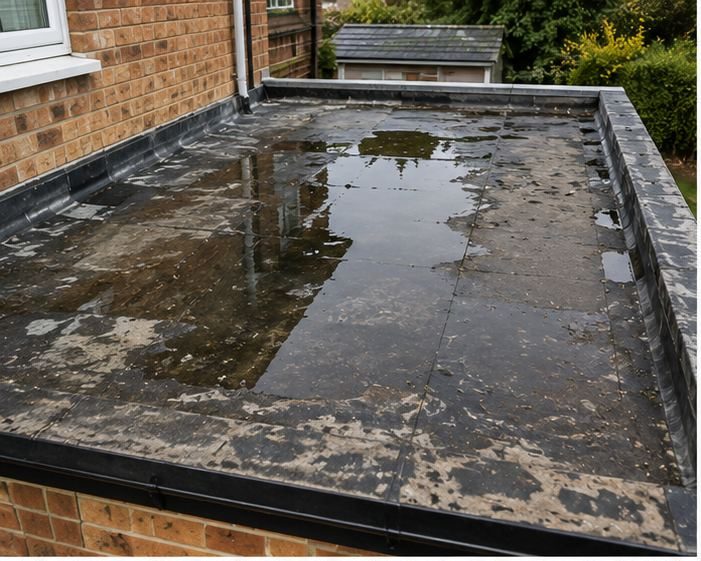
Blocked or undersized outlets make the problem worse. On many Ridgeway properties, gutter outlets and drainage points gradually collect leaves, moss and general debris, especially on roofs near trees or in sheltered corners, and a partially blocked outlet can cause water to back up and pool even on a roof with reasonably good falls.
Structural settlement can play a part too, particularly on older Ridgeway properties where a roof structure has moved slightly over decades. A roof that drained perfectly well when it was first built can develop a low spot years later simply because the timbers beneath have settled unevenly, and this kind of gradual change is easy to miss until standing water becomes a visible, recurring problem.
The membrane itself is rarely the actual cause of ponding, but it does bear the consequences. EPDM is generally tolerant of occasional standing water in the short term, more so than some other flat roofing materials, but persistent ponding anywhere on a roof — regardless of the covering — increases the chance of dirt build-up, algae growth, and added stress on seams and detailing over the years.
Preventing standing water usually starts with correcting the falls rather than simply re-covering the roof and hoping for a different result. This can mean adding tapered insulation to build in a proper slope, adjusting the structure beneath the deck, or repositioning outlets so water has a clear, short route off the roof rather than pooling before it gets there.
Regular maintenance also has a part to play. Keeping gutters, outlets and roof edges clear of leaves and debris, particularly during autumn, helps water drain away as intended and stops minor issues from developing into standing water problems, especially on Ridgeway roofs overhung by trees or positioned where wind-blown debris tends to collect.
It's also worth pointing out that not every trace of water on a flat roof is a problem — a shallow film that clears within a few hours of rain stopping is generally normal. It's water that lingers for a day or more, particularly in the same spot after every downpour, that's worth investigating, since that pattern points to a genuine falls or drainage issue rather than simply the roof drying out in its own time.
If you've noticed pooling water on a flat roof in Ridgeway, it's worth having the falls, outlets and overall drainage assessed rather than assuming a new membrane alone will solve it. Brunel Roofing Bristol can identify exactly why water is collecting and recommend the right combination of repair, drainage improvement or EPDM installation to put it right.
Get a Free Quote for EPDM Roofing in Ridgeway
Every roof is different — the fastest way to get an accurate answer is a quick chat with our team.