
One of the questions we're asked most often by homeowners in Ridgeway is what happens if the timber decking under a flat roof turns out to be damaged once the old covering is stripped back. It's a fair question, because the deck is doing all the structural work — the EPDM membrane simply sits on top of it and keeps water out, so a weak deck is a real problem regardless of how good the membrane above it is.
Deck damage typically comes from water that has found its way in over a long period, often through a failed felt joint, a perished upstand, or a gap around a pipe or roof light that was never properly sealed. Because the deterioration happens gradually and out of sight beneath the old covering, many Ridgeway homeowners have no idea there's a problem until the roofer lifts the existing material.
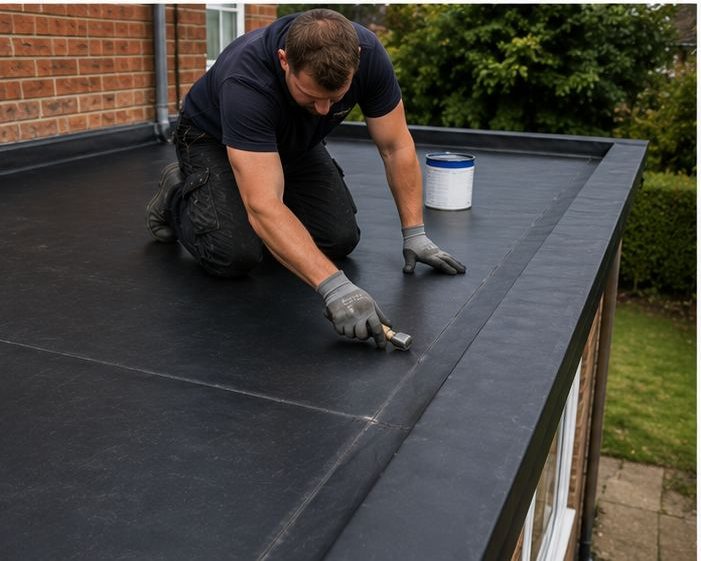
The type of decking involved also affects how it tends to fail. Plywood decking often shows delamination, with the layers of the board starting to separate when exposed to sustained moisture, while traditional timber boarding tends to soften and, in more advanced cases, rot along the affected sections. Either way, the fix is broadly the same: remove what's compromised and replace it with sound material before proceeding.
Once exposed, damaged decking can range from minor softening around a single joint to more widespread rot across a section of the roof. A competent roofer will check the deck by eye and by feel, pressing and probing for soft or spongy areas, rather than assuming that because the top surface looks fine the timber underneath is sound.
Where the damage is isolated, the affected boards or sections of ply can usually be cut out and replaced with new timber that matches the existing deck thickness and falls, allowing the EPDM membrane to be installed over a solid, level surface without disturbing the rest of the roof structure unnecessarily.
In cases where the deterioration is more extensive — for example, if water has been tracking across a wide area or has affected supporting joists as well as the surface decking — a larger section of the roof structure may need to be rebuilt before any new waterproofing can go down. This adds cost and time to a project, but installing EPDM over an unsound deck would only mask the underlying problem rather than solve it.
This is exactly why simply overlaying a new membrane on top of an old, unopened roof is rarely a sound approach for a Ridgeway property, even though it might look like the cheaper option on paper. Without lifting the existing covering and inspecting what's underneath, there's no way to know whether the deck is fit to carry a new roof for years to come.
It's worth adding that discovering deck damage isn't a sign anything was done wrong originally — timber decks can deteriorate slowly over many years even under a reasonably well-maintained roof, particularly around older joints or where a covering has simply reached the end of its working life. What matters is that it's found and properly addressed now, rather than concealed under a new membrane and left to worsen out of sight.
If you're concerned about the condition of a flat roof deck on your Ridgeway property, or you've noticed staining, sagging or a soft feel underfoot, it's worth having it properly assessed before any decisions are made about re-covering. Brunel Roofing Bristol will inspect the deck honestly, explain what repairs are genuinely needed, and only then recommend the right EPDM installation for a lasting result.
Get a Free Quote for EPDM Roofing in Ridgeway
Every roof is different — the fastest way to get an accurate answer is a quick chat with our team.