Flat-roofed extensions are a common sight across Ridgeway, whether it's a kitchen extension, a garden room, or additional living space built onto the rear of a house, and EPDM rubber roofing has become one of the most popular choices for covering them. Its properties suit the demands of a modern extension roof particularly well.
One reason EPDM works so well on extensions is its flexibility. It's supplied as a single, large sheet of synthetic rubber that can be dressed around corners, upstands and abutments with relatively few joints, which matters on an extension roof where the covering often has to meet a house wall, a window, or a change in roof level all in a fairly small area.
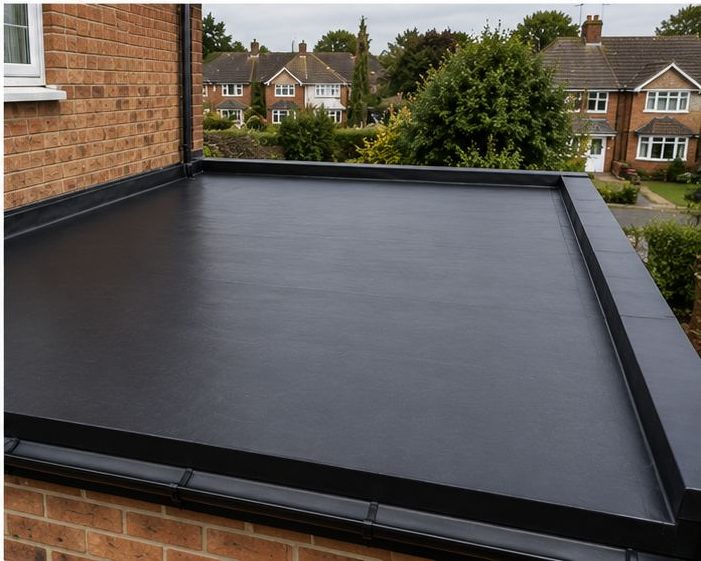
Many Ridgeway extensions are also built quite close to boundary walls or fences, and being able to install a large, continuous membrane in a single visit reduces disruption for both the homeowner and any neighbouring properties compared with a multi-layer felt system that typically takes longer to apply and involves working with hot bitumen or open flame torches.
Extensions in Ridgeway also frequently involve roof lights, soil vent pipes for new bathrooms or kitchens, and sometimes solar or ventilation fittings, and EPDM can be detailed neatly around all of these using purpose-made trims and adhesives, rather than relying on the multiple overlapping layers that older felt systems typically need.
Durability is another reason EPDM suits extension roofs specifically. An extension roof is often walked on occasionally for maintenance, exposed to falling debris from nearby trees, and subject to the same weather as the rest of the house, and EPDM's flexible, weather-resistant surface generally copes with this kind of everyday wear better than felt roofing does over the same period.
It's worth remembering, though, that suitability isn't only about the membrane. An extension roof's performance also depends on how well its falls are designed to shed water, how the junction with the main house wall is detailed, and whether the deck beneath has been built to a standard that will support the roof for years to come — all things a roofer should check regardless of which covering is chosen.
For a new extension being built in Ridgeway, EPDM can be planned in from the design stage, allowing falls, upstands and penetrations to be arranged with the membrane in mind from the outset. For an existing extension roof that's reaching the end of its life, EPDM is equally suitable as a replacement covering, provided the deck underneath is checked and, where necessary, repaired first.
Compared with felt, which is still sometimes used on extension roofs largely because it's a familiar, lower-cost option, EPDM tends to offer noticeably better long-term value once you factor in its durability and reduced likelihood of joint failure. And compared with GRP fibreglass, another common alternative, EPDM's flexibility means it isn't as reliant on a perfectly rigid substrate, which can make it a more forgiving choice on the kind of timber-framed extension roofs common in Ridgeway.
If you're planning a new extension in Ridgeway or need to replace the roof on an existing one, it's worth discussing EPDM as an option early on. Brunel Roofing Bristol can advise on how it would be detailed for your particular roof and provide a quotation once the size, access and any specific features have been assessed.
Get a Free Quote for EPDM Roofing in Ridgeway
Every roof is different — the fastest way to get an accurate answer is a quick chat with our team.