
Where an extension roof meets the wall of the main house in Lawrence Weston, the join is usually protected by an abutment flashing. Done properly this is formed in lead, dressed to follow the profile of the tiles or slates below and tucked into a chase cut into the brickwork or mortar joint above, so that water running down the wall is directed out over the roof covering rather than behind it and into the structure of the house.
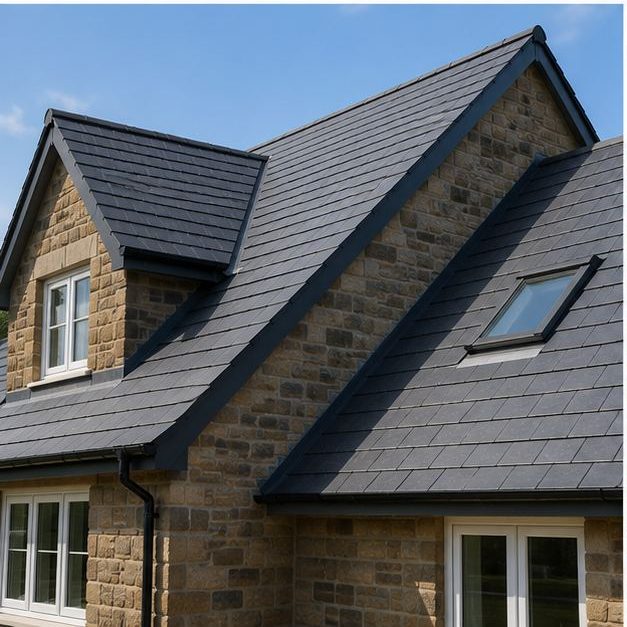
On older properties, this detail was sometimes finished more cheaply with a mortar fillet instead of lead, or with lead that has since become brittle, cracked, or lifted away from the wall after decades of thermal movement and weathering through many Bristol winters. Replacing this abutment properly during a re-roof is one of the most effective single improvements that can be made where an extension joins the main structure, often resolving a leak that has resisted several previous repair attempts.
The process starts with removing the old flashing and cutting a new chase into the mortar joint if one is not already present, deep enough to hold a lead upstand securely once it is dressed and wedged into place with lead wedges spaced along its length. A step flashing is usually formed to follow the line of the tiles, with individual pieces overlapping down the slope so each one sheds water onto the piece below, and a continuous cover flashing bedded into the chase above to seal the top edge against the wall.
Lead used for this kind of work needs to be an appropriate thickness, or code, for its position and span, since a flashing that is too thin will crack or split with repeated expansion and contraction, undoing the benefit of replacing it in the first place. Where lead theft or cost is a concern, there are now durable lead-free flashing alternatives that can be used in a similar way, though traditional lead remains the standard choice on most re-roofing projects around Lawrence Weston for its longevity and ease of dressing around detailing.
Pointing the new chase afterwards with a suitable mortar mix also matters, since a poorly finished chase line can itself become a route for water to track behind the flashing over time, undermining otherwise good lead work with a small but avoidable finishing error.
Getting this detail right is one of the reasons an abutment that has leaked for years can be fixed permanently during a proper re-roof rather than needing repeated attention every winter. Brunel Roofing Bristol includes this kind of detailing as standard in its re-roofing work, so contact us for a quote if you have an extension abutment that needs attention.
Get a Free Quote for New Roof Installations in Lawrence Weston
Every roof is different — the fastest way to get an accurate answer is a quick chat with our team.