
Lichen is often confused with moss, but the two behave quite differently on a roof. Where moss forms a soft, moisture-retaining mat, lichen grows as flat or slightly raised patches, often grey, yellow or pale green, that bond tightly to the surface of a tile or slate. On many of the older roof coverings found throughout Redfield, both can appear together, and each contributes to the gradual weathering process in its own distinct way.
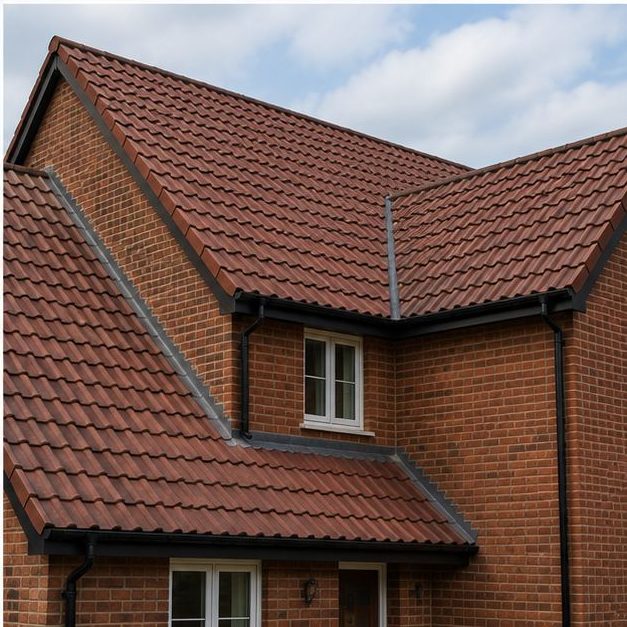
Lichen attaches itself firmly to the material beneath it, and its root-like structures can penetrate microscopic pores in tiles or slate, slowly working into the surface over years rather than months. Attempting to scrape lichen away can sometimes do more harm than leaving it alone, as it may take fragments of the tile or slate surface with it in the process. This is why lichen is usually best assessed by a professional rather than aggressively removed by a homeowner on an older roof.
General weathering compounds these effects over time, quite independently of any plant growth. Decades of sun, rain, frost and wind gradually change the texture and structural integrity of roofing materials, regardless of whether moss or lichen happens to be present. On a typical Redfield terrace, a roof that has weathered for forty or fifty years will usually show a combination of colour change, surface roughness and small areas of material loss around edges and corners, particularly on the more exposed south or west-facing slopes.
Slate roofs weather differently to tiled ones, and the signs of ageing can be more subtle. Rather than gradual surface erosion, older slates tend to delaminate at the edges or develop a slightly friable texture that can be felt more easily than seen. Lichen colonising these weakened edges can accelerate the process further, making regular close inspection particularly valuable on slate-covered Redfield properties.
Exposure also varies considerably from one part of a roof to another, even on the same house. A chimney stack or a nearby taller building can shelter one section of roof from direct sun and prevailing wind while leaving another fully exposed, which is often why lichen and weathering appear patchy rather than even across an entire roof slope. Understanding this pattern helps when deciding whether a problem is localised or indicative of the roof as a whole reaching the end of its life.
It is also worth remembering that weathering affects more than just the tiles or slates themselves. Mortar joints, flashing and the timber battens underneath all age at their own pace, sometimes faster than the visible covering above them. A roof that looks reasonably presentable from the outside can still have hidden weaknesses developing in these less visible components after decades of exposure to the same weather.
None of this happens overnight, which is part of the reason weathering is easy to overlook until it has progressed significantly. A roof can look broadly the same from the street for years while quietly losing its resilience against wind-driven rain and heavy weather. If lichen or general weathering has left you wondering how much life remains in your roof, Brunel Roofing Bristol can carry out a close inspection of your Redfield property and set out your options clearly, whether that means targeted repairs or a full replacement.
Get a Free Quote for New Roof Installations in Redfield
Every roof is different — the fastest way to get an accurate answer is a quick chat with our team.