
Hotwells is home to a good number of Georgian and Victorian period properties, many perched on the steep streets rising up from the harbourside towards Clifton. These older roofs, often original slate, call for a noticeably different approach to cleaning than a modern tiled roof on a newer estate elsewhere in Bristol, and treating them the same way risks doing more harm than good.
The starting point should always be a proper assessment rather than jumping straight to cleaning. Period roofs in Hotwells have typically been repaired and maintained over many decades, sometimes by different hands using different materials and standards, which means the condition can vary quite a bit even across a single roof slope. Understanding what is actually there, tile by tile in places, matters before deciding how to clean it safely and appropriately.
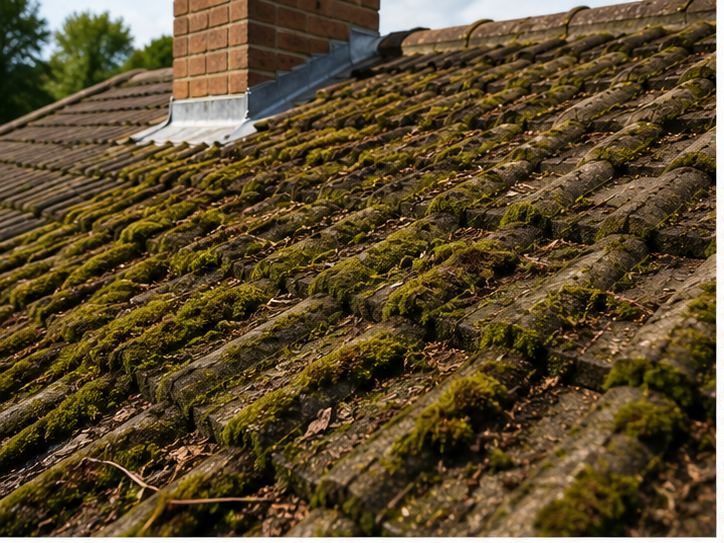
Original slate, in particular, needs to be treated gently. Slate can be more brittle than modern concrete tiles, especially where it has weathered over a long period, and aggressive high pressure jet washing risks cracking slates, dislodging them from their fixings, or stripping away the thin protective surface layer that has built up naturally over time and that helps protect the slate beneath.
This is why a soft-wash approach, using lower pressure water combined with a biocide treatment to break down moss, algae and lichen, tends to be the more appropriate method for period roofs of this kind. It removes the growth effectively while being far gentler on original materials that were never designed to withstand modern high pressure equipment developed long after these roofs were first laid.
Access is another consideration specific to a lot of Hotwells properties. The steep, narrow streets and terraced layout common in the area can make roof access more involved than on a typical suburban property, and this needs to be planned for properly rather than treated as an afterthought, both for safety and to avoid unnecessary disturbance to the roof surface during the work itself.
Detailing around chimneys, leadwork and valleys deserves particular care too, since period properties in Hotwells often have more of this kind of detailing than newer builds, and it tends to be where moss and grime accumulate most heavily as well as where damage is easiest to cause if the wrong method is used carelessly.
It is also worth having a conversation about what a clean roof should actually look like on a period property. Some homeowners want the tiles or slate looking close to new, while others are happy for a small amount of natural weathering and lichen to remain, particularly where it is not causing any functional issue. This is worth discussing before work begins rather than assuming one standard applies to every roof in the area.
Weather and timing also deserve a mention. Cleaning during a settled, mild spell tends to give better results than rushing a job in poor conditions, since biocide treatments need a reasonable window to work properly and the roof benefits from being able to dry out fully once the work is finished. Getting this right the first time also tends to save homeowners money over the years, since a well-treated roof needs attention less often than one cleaned carelessly.
If you have a period property in Hotwells and want its roof cleaned properly, with the right level of care for original slate and detailing, Brunel Roofing Bristol can assess the roof and recommend an approach suited to your specific property.
Get a Free Quote for Roof Cleaning in Hotwells
Every roof is different — the fastest way to get an accurate answer is a quick chat with our team.