
It is tempting to think that the quickest way to get rid of moss is simply to blast it off with as much water pressure as possible, but on the older roofs common across Hotwells, this approach can end up causing more harm than the moss itself ever would, sometimes turning a straightforward clean into an unplanned repair bill.
Many properties in Hotwells date back to the Georgian and Victorian periods, with original slate roofs that have weathered gracefully over well over a hundred years in some cases. That age is exactly what makes them vulnerable to aggressive cleaning methods. Slate that has softened slightly with age, or developed hairline weaknesses that are not visible from the ground, can crack or shatter under the force of high pressure jet washing without any obvious warning beforehand.
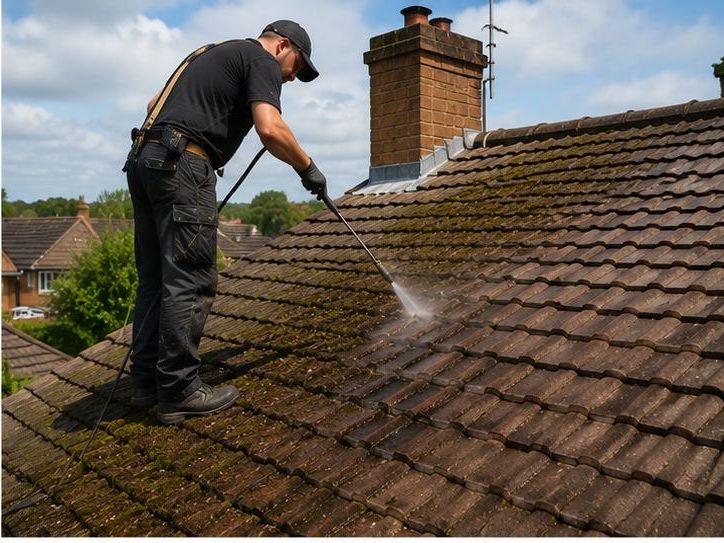
Beyond the tiles or slates themselves, high pressure water can also drive moisture into places it should not go. Aggressive jetting can force water up under the laps of tiles or slates, into gaps in aging mortar at ridges and hips, or around flashing and leadwork near chimneys, all of which are common features on the older housing stock in Hotwells. Once water has been pushed into these areas, it can lead to damp problems that were not there before the cleaning started and that can take a while to become apparent.
There is also a longer term issue with surface stripping. High pressure washing can wear away the thin, weathered surface layer that slate and older tiles develop naturally over time, leaving a rougher, more porous surface behind. Ironically, this rougher surface often makes it easier for moss and algae to take hold again afterwards, meaning an aggressive clean can actually accelerate the very problem it was meant to solve rather than fixing it for the long term.
Fixings are another vulnerable point. Older slates and tiles in Hotwells are sometimes held in place with fixings that have weakened slightly over the decades. The force of high pressure water hitting a slate directly can be enough to dislodge it from an already loosened fixing, even if the slate itself is not damaged, resulting in slipped or missing tiles that were not a problem before the cleaning work began at all.
A gentler soft-wash approach avoids all of these risks. By relying on a biocide treatment to break down moss and algae at a chemical level, combined with much lower water pressure to rinse it away, the growth is removed without subjecting old, weathered materials to force they were never designed to withstand in the first place.
This is really the core argument for treating roof cleaning as a specialist roofing task rather than a generic exterior cleaning job, particularly on period properties. Understanding how old slate, mortar and flashing actually behave under pressure is what protects the roof during the cleaning process itself, rather than treating every roof the same way regardless of age or material.
It is also worth saying that the risks of aggressive cleaning are not always immediately obvious. A slate that has been weakened by high pressure water may not fail straight away, sometimes only slipping or cracking further weeks or months later during a spell of wind or heavy rain, by which point it can be harder to connect the damage back to the original cleaning work.
If you have an older roof in Hotwells and want it cleaned without risking the kind of damage aggressive methods can cause, Brunel Roofing Bristol uses a careful, appropriate approach suited to period properties, and can talk you through exactly how.
Get a Free Quote for Roof Cleaning in Hotwells
Every roof is different — the fastest way to get an accurate answer is a quick chat with our team.