Rear extensions are a familiar sight in Barton Hill, where many terraced and semi-detached properties have gained extra kitchen, dining, or living space over the years by building outward at the back. Most of these additions end up with a flat or low-pitched roof, and getting the covering right on that roof matters more than many homeowners initially expect.
EPDM rubber membrane is a genuinely strong option for this kind of structure. Because it is typically supplied and installed in large sheets, a rear extension roof of fairly typical domestic size can often be covered with very few seams, sometimes none at all across the main area. That matters because seams are consistently one of the more common places where flat roofs eventually develop leaks, so reducing them is a real practical benefit rather than just a selling point.
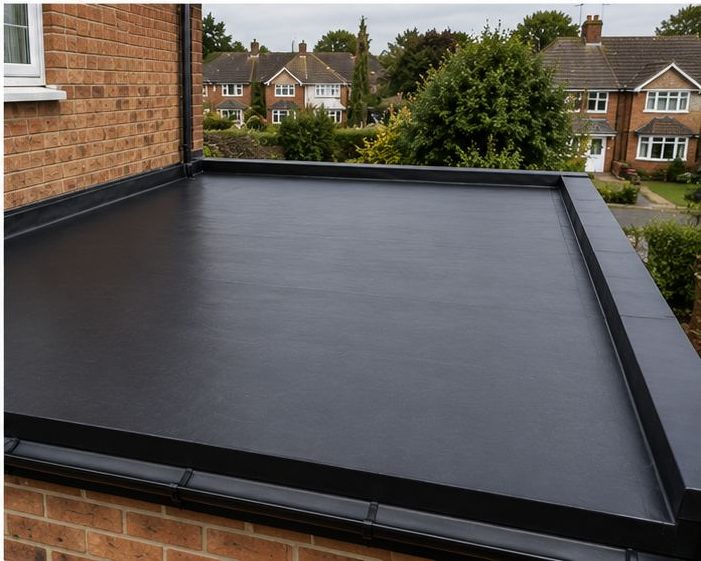
The flexibility of EPDM is particularly useful on rear extensions, where the roof often has to work around several features at once, such as a junction against the original rear wall of the house, an upstand where the extension meets a neighbouring structure, or a rooflight bringing daylight into the new space. EPDM can be dressed neatly around all of these details, provided the installer takes the time to detail each junction properly.
That wall abutment where a new extension roof meets the existing house is worth calling out specifically, because it is one of the most common failure points on rear extension roofs generally. A well-installed EPDM system, with the membrane properly turned up and sealed against the wall, addresses this vulnerable area far more reliably than a poorly detailed felt junction often does.
Weather resistance also counts for a lot here. Barton Hill sees the same demanding mix of rain, frost, and summer heat as anywhere else in the region, and EPDM's ability to stay flexible and watertight across that range means the roof is less likely to develop the cracking or brittleness that can affect older or lower quality coverings after a few winters.
As with any flat roof, though, EPDM's performance on a rear extension depends on getting the fundamentals right underneath it. The roof deck needs to be properly built and fixed, the falls need to direct water toward the outlets rather than allowing it to pool, and insulation should be planned in from the start if the extension is being built new, since retrofitting it later is far more disruptive.
Many Barton Hill rear extensions also need to accommodate soil pipes or extractor outlets passing through the roof, and EPDM handles these penetrations well when they are dressed correctly, keeping the whole surface as one continuous waterproof layer rather than a series of separate patches.
It is also worth thinking ahead to how the roof will be accessed for any future maintenance, such as clearing gutters or checking outlets, since rear extensions in a terraced setting sometimes have limited access from ground level. Discussing this with your installer at the planning stage means the finished roof is both well built and practical to look after in the years that follow.
If you are planning a rear extension in Barton Hill and thinking about roofing options, it is worth having your specific roof shape and junctions assessed before deciding. Brunel Roofing Bristol can advise on whether EPDM suits your project and provide a quotation based on the actual plans for your extension.
Get a Free Quote for EPDM Roofing in Barton Hill
Every roof is different — the fastest way to get an accurate answer is a quick chat with our team.