
Portishead's position on the edge of the Severn Estuary means homes here deal with a particular combination of weather that inland Bristol suburbs rarely see in the same measure: salt-laden air, strong prevailing winds coming off the water, and driving rain that can hit a flat roof almost horizontally during a bad spell. Anyone weighing up flat roofing options for a garage, extension, or porch in Portishead is right to ask whether a given material can actually cope with that environment, rather than just looking good on a calmer day.
EPDM rubber membrane is, in general terms, well suited to exactly this kind of exposure. It is a synthetic rubber that stays flexible across a wide temperature range and does not become brittle in cold, salty winds the way some older felt products can. Because it is typically installed as a single sheet with very few joints, there are fewer places for wind-driven rain to find a way in compared with roofs built up from multiple overlapping layers, which matters a great deal on an exposed coastal plot.
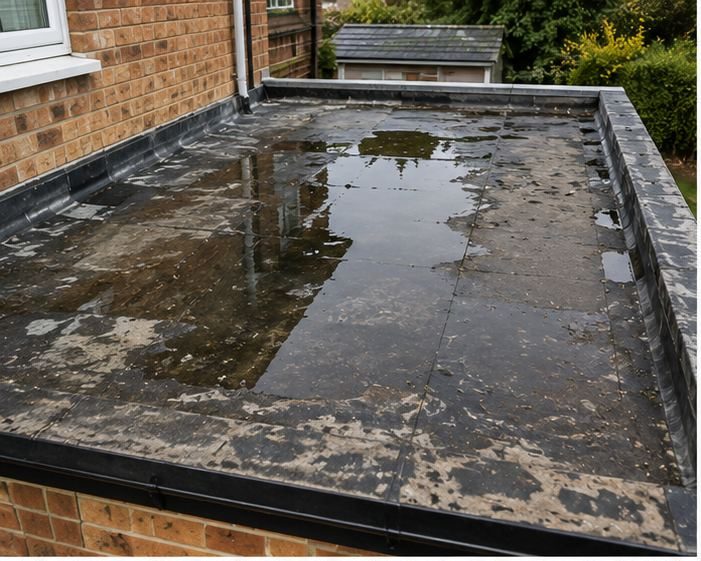
That said, suitability for coastal weather is not purely about the membrane itself. A roof's actual performance in Portishead's conditions depends just as much on how it is detailed at the edges, upstands, and any penetrations such as vents or soil pipes. Wind can get underneath a poorly dressed edge trim and start lifting a membrane over time, so the quality of the installation around those vulnerable points is often what separates a roof that shrugs off decades of estuary weather from one that starts to show problems within a few years.
Drainage is another factor that becomes more important the more exposed a property is. A flat roof that copes fine with steady rainfall can still struggle if water is being blown sideways and pooling against an upstand or a poorly positioned outlet. Getting the falls right, and making sure outlets are sized and positioned sensibly, is part of making sure an EPDM roof actually performs the way it should for a coastal Portishead home rather than just being a good membrane badly applied.
It is also worth remembering that the roof deck underneath the membrane plays a role in overall weather resistance. A sound, well-fixed timber deck gives the EPDM something stable to bond to and move with, whereas decking that has already been weakened by damp or salt-laden moisture ingress can undermine even a well-installed membrane. This is one of the reasons a proper inspection of the existing structure matters before any new covering goes on, particularly on older Portishead properties where the deck may not have been touched in a long time.
Compared with felt, which tends to be more vulnerable to UV and weather-driven degradation over time, EPDM generally holds up for considerably longer under sustained coastal exposure. It is not that felt cannot be used near the coast, but the margin for error is smaller, and Portishead's combination of salt air and wind exposure is the kind of environment where a more resilient material tends to pay for itself over the years.
None of this means every EPDM roof in Portishead is installed to the same standard, or that the material alone guarantees a trouble-free roof. The right approach is to have the specific roof assessed on its own merits, looking at its exposure, existing condition, and detailing, rather than assuming any flat roofing job will automatically stand up to what the estuary can throw at it.
If you are considering EPDM for a garage, extension, or outbuilding roof in Portishead and want to know how it would actually be detailed and installed for your property's exposure, Brunel Roofing Bristol can carry out a proper assessment and talk you through what a coastal-appropriate installation would involve.
Get a Free Quote for EPDM Roofing in Portishead
Every roof is different — the fastest way to get an accurate answer is a quick chat with our team.