Home extensions have become a common way for Portishead homeowners to add space without the disruption and cost of moving, and most single-storey extensions end up with some form of flat or low-pitched roof, whether that is the main covering or a smaller section tying into the existing house. Choosing the right material for that roof is worth getting right, because it is not something you want to be revisiting every few years.
The three materials most commonly discussed for extension roofs are felt, GRP fibreglass, and EPDM rubber membrane. Felt is the traditional, budget option, but it tends to be the least durable of the three, often showing signs of ageing, cracking, and seam failure well before the other two materials would. GRP gives a hard, glass-like finish and can look very neat, but it relies on a series of bonded layers and trims, and any issues tend to show up at joints, upstands, or where the fibreglass meets a different material.
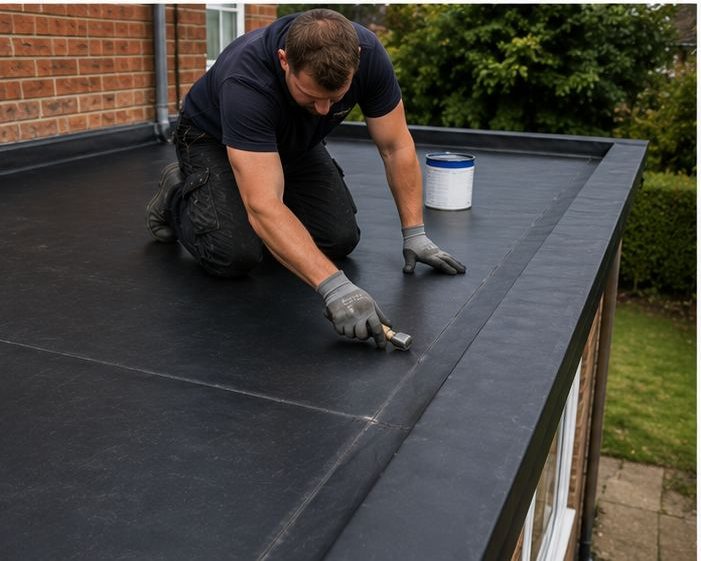
EPDM sits well between the two for most Portishead extensions. It is generally more durable and long-lasting than felt, and because a typical domestic roof can often be covered with a single sheet, there are far fewer joints and seams to worry about compared with a GRP installation, which reduces one of the more common sources of future problems.
Flexibility is another reason EPDM tends to suit extensions specifically. New extensions can experience some settlement and minor movement in the first year or two as the structure beds in, and a flexible rubber membrane accommodates that kind of movement far better than a rigid material, which can be prone to cracking if the structure shifts even slightly beneath it.
That is not to say EPDM is automatically the right choice for every extension in Portishead without any thought. The shape of the roof, how many upstands and penetrations it has, and how it meets the existing house all affect how well any given material will perform. A roof with several rooflights or a complicated junction against an existing wall needs careful detailing whichever material is used, and a good installer will talk through those specifics rather than simply recommending the same thing for every job.
Drainage and falls also deserve attention on extension roofs, since a newly built structure gives the chance to get the fall right from the outset rather than working around an existing problem. Whatever covering is chosen, a roof that has been designed with adequate fall towards a properly sized outlet will always perform better and last longer than one where water is left to find its own way off slowly.
For most Portishead homeowners building or re-covering an extension, EPDM offers a sensible balance of durability, flexibility, and a clean, low-maintenance finish, without the multiple joints associated with some GRP installations or the shorter lifespan typically associated with traditional felt.
If you are planning an extension in Portishead and want advice on which flat roofing option genuinely makes sense for your specific design, Brunel Roofing Bristol can talk through the roof's shape, detailing, and drainage before recommending the right material for the job.
Get a Free Quote for EPDM Roofing in Portishead
Every roof is different — the fastest way to get an accurate answer is a quick chat with our team.