
Clifton is one of Bristol's most distinctive areas, known for its elegant Georgian terraces, Victorian villas and grand crescents that climb the hillside above the gorge. Many of these buildings are well over a century old, and their roofs were built using methods and materials that differ significantly from a modern new-build. Re-roofing a property like this isn't simply a case of stripping the old covering and fitting a new one; it means working with the building's history while making sure the finished roof performs properly for decades to come, without losing the appearance that makes the property, and the wider street, worth caring about.
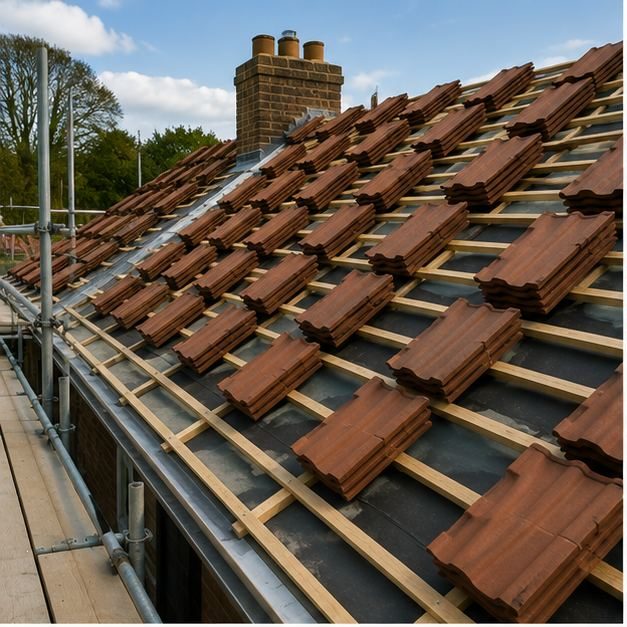
One of the first things to consider on a historic Clifton property is what lies beneath the visible covering. Original rafters, purlins and timber sections were often sized generously by the standards of their day, but decades of weathering, past patch repairs or poorly ventilated lofts can leave timbers weakened in places, particularly around chimney trimmers and valley junctions where moisture tends to linger longest. A thorough inspection before work begins helps identify any structural attention needed, so it can be planned and priced alongside the re-roof rather than discovered unexpectedly halfway through the job once the old covering has already been stripped away.
Character details are another area that deserves close attention on this type of property. Ornate chimney stacks, decorative bargeboards, parapet walls and close-cut verges are common on Clifton's older housing stock, and each of these features interacts with the roof covering in a specific way that a standard modern specification doesn't always account for. Getting these junctions wrong, even with good quality materials, can lead to leaks in awkward places or a finished result that looks noticeably out of step with the neighbouring properties it sits alongside.
Because so many of Clifton's roofs were originally covered in natural slate or clay tile, matching the replacement to the age and style of the building is important both visually and practically. A mismatched roof can stand out awkwardly on a terrace where uniformity was very much part of the original design intent, so specifying materials that genuinely reflect the property's period, rather than defaulting to whatever happens to be cheapest or most readily available, is usually the right approach for a home in this part of the city.
Access can also shape how a historic re-roof is carried out, since many Clifton properties sit on steep terraces or have limited space at the front or rear for scaffolding and material storage. Sequencing the work carefully, protecting original stonework, railings and windows during the build, and keeping disruption to neighbours to a minimum all form part of doing the job properly on a street where every property has its own history worth respecting.
If you own a period property in Clifton and are weighing up a full re-roof, it helps to speak with a roofing contractor who understands how these older buildings are put together. Brunel Roofing Bristol can carry out a proper assessment and talk through the options available, so you end up with a roof that suits the building and gives you lasting peace of mind.
Get a Free Quote for New Roof Installations in Clifton
Every roof is different — the fastest way to get an accurate answer is a quick chat with our team.