
Step flashing is the section of leadwork used where a sloping roof runs alongside a wall that rises higher than the roof itself, a detail found on a great many St Pauls properties thanks to the terraced layout and the varied roofline heights along shared streets, where one house often sits a storey higher than its neighbour. Rather than one continuous strip, step flashing is made up of individual pieces, each one 'stepped' up the slope and tucked into a mortar joint, overlapping the piece below it as it climbs towards the ridge.
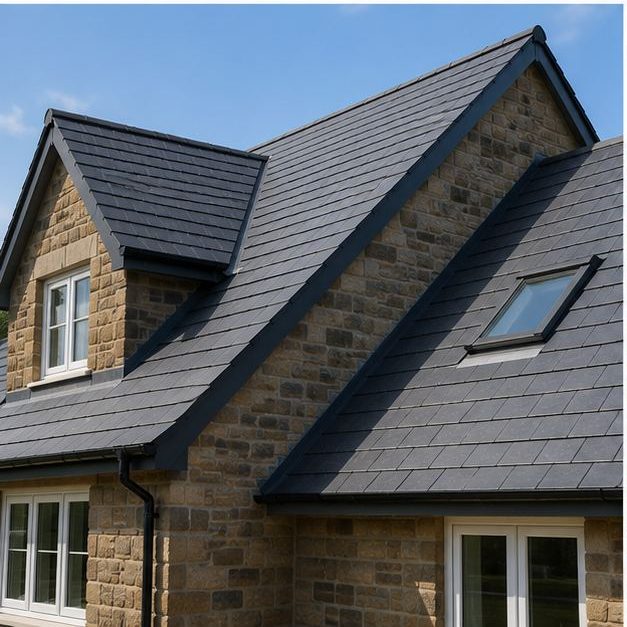
This staggered design exists for a good reason. A single long strip of lead running diagonally up a wall would be prone to splitting as the roof and wall move independently of one another over time, settling and expanding at slightly different rates. By breaking the flashing into separate steps, each piece can flex slightly without transferring stress to its neighbours, which is why step flashing, properly installed, tends to last as long as the rest of the roof covering around it rather than being a recurring weak point.
The trouble with older step flashing in St Pauls is usually not the lead itself but everything around it. Mortar joints that once held each step firmly in place can crumble with age, allowing sections to lift or slip, and previous repointing work does not always reinstate the flashing correctly, sometimes simply mortaring over the top of a step rather than lifting it and resetting it properly. Once a step lifts even slightly, wind-driven rain can track behind it and into the roof timbers below, often some distance from where the leak eventually shows up inside the house, which makes the fault hard to trace without stripping the roof back.
During a re-roof, Brunel Roofing Bristol removes the old step flashing entirely along with the worn covering, cuts fresh mortar joints where needed, and dresses new lead steps into place as the fresh tiles or slates are laid alongside them. This means every step is correctly lapped, properly secured, and bedded into sound mortar rather than old, deteriorated joints that were never designed to be reused for another few decades of service.
It is also worth thinking about how step flashing interacts with the mortar joints of a neighbouring property, since on many St Pauls terraces the wall the flashing is dressed into belongs to the house next door rather than your own. Good practice means the joints are cut and made good neatly, without disturbing more of the adjoining brickwork than necessary, so the finished work looks tidy from both sides of the boundary.
Because step flashing sits along such a visible run on many St Pauls terraces, getting it right also keeps the roofline looking neat and consistent with the property next door, which matters on streets where roofs are seen as a continuous whole. If you have noticed damp along an internal wall that borders a neighbouring roof, it is worth having the step flashing checked as part of any quote, and Brunel Roofing Bristol is happy to include this in an inspection.
Get a Free Quote for New Roof Installations in St Pauls
Every roof is different — the fastest way to get an accurate answer is a quick chat with our team.