
When it comes to letting a roof breathe, two of the most common approaches are individual tile vents dotted across the roof slope, or a continuous ventilated ridge running along the apex. Both do the same essential job of allowing warm, moist air to escape from the loft space, but they achieve it in different ways, and the right choice for a home in Hanham often comes down to the roof's design, its age, and how it looks from the street.
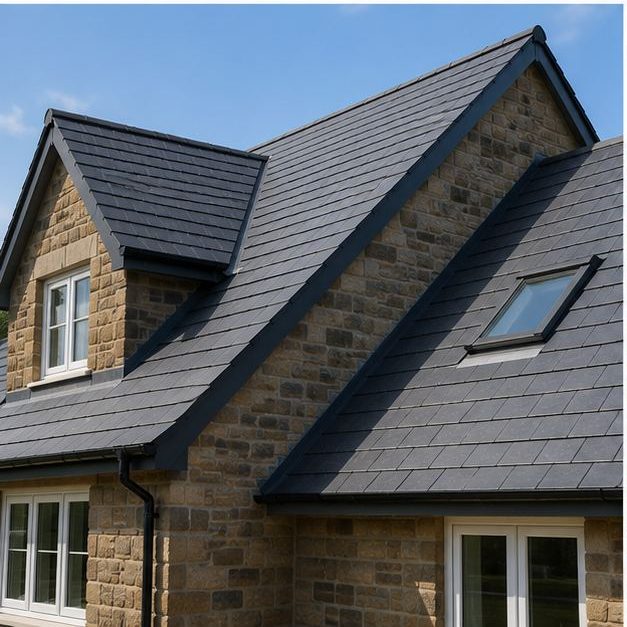
Tile vents are individual units that replace a small number of ordinary tiles or slates at intervals across the roof. They're a good fit for roofs with complicated shapes, such as those with hips, dormers or several smaller sections, where a continuous ridge vent isn't practical or where only part of the roof needs additional airflow. On the more traditional properties found around Hanham's older streets, tile vents also have the advantage of being easy to match closely to the existing tile profile and colour, so they sit fairly unobtrusively within the roof slope. Because each vent is an individual unit, they can also be positioned precisely where a particular section of loft is known to run warmer or damper than the rest.
Ridge ventilation, by contrast, runs the full length of the ridge line and tends to offer a higher, more consistent volume of airflow because it isn't limited to a handful of individual points. This makes it a popular choice on the larger, simpler roof shapes common on newer housing in and around Hanham, where a long, uninterrupted ridge gives the system plenty of length to work with. It's also generally less visible from ground level than scattered tile vents, since the ridge tiles themselves conceal the ventilation strip beneath, which appeals to homeowners who would rather the roof's appearance wasn't altered by extra fittings.
Cost and installation effort differ between the two as well. Tile vents can sometimes be added or adjusted individually without disturbing the whole ridge line, which is useful where only a targeted improvement is needed, whereas ridge ventilation is typically specified as part of a full re-roof since it involves the ridge tiles being lifted and refitted with the ventilation strip beneath. This makes ridge ventilation a natural fit when a roof is already being fully stripped and re-covered, since the extra work involved is minimal compared with retrofitting it later.
Neither option is universally better than the other; it's really a question of matching the system to the roof. A steep, ornate roof with multiple small sections might get more even coverage from carefully positioned tile vents, while a broad, simple pitch might be served just as well, if not better, by a single ridge system with far fewer visible fittings. Combining both approaches is also common, using ridge ventilation as the main exhaust route with tile vents added where a particular section of loft needs extra help.
If you're not sure which route suits your roof, Brunel Roofing Bristol can talk through both options during a site visit, taking into account the shape of your roof and how your loft is used, and recommend whichever system will keep your Hanham home properly ventilated without compromising on appearance.
Get a Free Quote for New Roof Installations in Hanham
Every roof is different — the fastest way to get an accurate answer is a quick chat with our team.