
EPDM is a genuinely durable, low-maintenance roofing material, but even a well-chosen membrane can develop leaks if the detailing around its edges isn't done properly. For flat roofs in Henbury, the perimeter of the roof, where the membrane meets a wall, parapet or roofline, is consistently one of the most common places for problems to start, even years after the roof was first installed.
The edge trims and drip details along the perimeter of an EPDM roof do a lot of the work in keeping water out, directing rainfall away from the building rather than letting it track back underneath the covering. If these trims weren't fitted correctly during installation, or have come loose or been damaged over time, water can find its way behind them, especially during the sort of wind-driven rain that isn't unusual in this part of Bristol during the autumn and winter months.
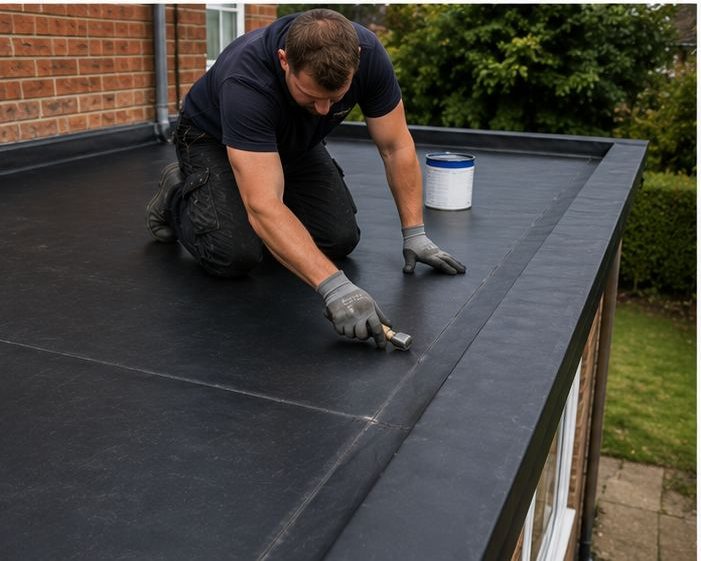
The edges of any flat roof are also the area most exposed to the elements, taking the brunt of wind loading, temperature swings and general movement in the structure below. Where the membrane hasn't been properly bonded right to the edge, or where adhesive has broken down over time, small gaps can open up that let water in, even if the main body of the roof remains completely sound and unaffected. This is one of the reasons a quality installation uses a properly specified adhesive system rather than cutting corners at the point where it matters most.
Termination bars, which secure and seal the membrane at its edges and upstands, are another common source of edge leaks when they haven't been fitted correctly or properly sealed. A termination bar that's under-tightened or missing sealant can allow water to creep in behind the membrane over time, even though everything looks fine from a distance and passes a casual glance.
Junctions where the roof meets a wall or parapet are similarly high-risk. These upstand details need the membrane dressed up the wall to an adequate height and properly finished, and any shortfall here, even a relatively small one, tends to show up as a leak sooner or later, particularly during heavier rain when water is running rather than just falling. A properly formed upstand should never need to rely on sealant alone to stay watertight.
In more exposed locations, inadequate mechanical fixing at the roof's edges can also leave a membrane more vulnerable to wind uplift, which can gradually work a covering loose at the perimeter even if it was well bonded when first installed, particularly on roofs that catch the wind more than most.
Because so many of these problems trace back to how the edges were originally detailed and fixed, correct installation at the perimeter matters just as much as the quality of the membrane itself, which is why edge detailing gets particular attention on every EPDM installation Brunel Roofing Bristol carries out. A roof that's had its edges properly finished from the outset tends to need far less attention over its lifetime than one where corners were cut early on.
If you're seeing signs of a leak around the edge of a flat roof in Henbury, it's worth having the perimeter detailing properly inspected rather than assuming the membrane itself has failed. Brunel Roofing Bristol can identify exactly where the problem lies and put it right.
Get a Free Quote for EPDM Roofing in Henbury
Every roof is different — the fastest way to get an accurate answer is a quick chat with our team.