
Standing water, sometimes called ponding, is one of the most frequent concerns raised by Eastville homeowners looking at their flat roofs after a spell of rain. A small amount of water sitting briefly after a downpour is not unusual, but pools that remain for a day or more, especially in the same spots each time, point to an underlying issue that is worth investigating rather than ignoring.
The most common cause is inadequate falls, meaning the roof deck was not built with enough of a slope to encourage water to drain towards the outlets or roof edge. Flat roofs are never perfectly flat; they are designed with a slight gradient, however subtle, so that rainwater moves off the surface rather than collecting on it. If that fall is too shallow, was installed incorrectly, or has been altered by movement in the roof structure over time, water will naturally gather in the lowest points.
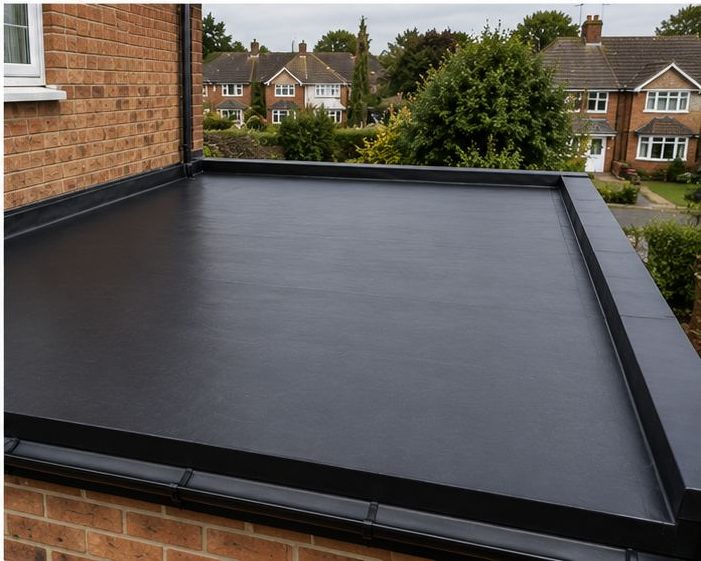
Blocked or undersized outlets are another frequent culprit on Eastville properties, particularly those near mature trees where leaves, moss and general debris can accumulate over the seasons. Even a well-designed roof with correct falls will hold water if the gully or outlet it drains towards is partially or fully blocked, so regular clearing of debris is a simple but important part of keeping a flat roof performing as intended.
Sagging or deflection in the roof deck itself can also create low spots where water settles. This is more likely on older timber decks that have absorbed moisture over time, or where the original structure was not quite substantial enough for the loads placed on it. Because this kind of sagging happens gradually, it can be easy to miss until ponding becomes a regular and obvious problem after every rain shower.
Standing water is not just a cosmetic nuisance. Prolonged exposure to pooled water places extra stress on any roofing membrane, increases the likelihood of the covering degrading faster in that specific area, and raises the risk of water eventually finding its way through a seam, upstand or minor imperfection. On an EPDM roof this risk is lower than on a felt roof with multiple joints, but it is still far better to address the underlying drainage problem than to rely on the membrane alone to cope indefinitely.
Weight is a further consideration that is easy to overlook. Water is heavy, and a roof that regularly holds a significant depth of standing water across a wide area is carrying a substantial additional load on its structure every time it rains heavily. Over years, that repeated loading can contribute to the very deck deflection that caused the ponding in the first place, creating a cycle where the problem gradually gets worse rather than staying the same, which is another reason Eastville homeowners are better off resolving the drainage issue rather than simply monitoring it.
Diagnosing the actual cause of standing water on an Eastville flat roof usually requires a proper on-site inspection, since it is rarely obvious from ground level whether the issue is falls, blocked outlets, deck deflection, or a combination of all three. Sometimes a targeted repair to improve drainage is enough; in other cases, a fuller re-covering with corrected falls and insulation tapering is the more sensible long-term fix.
If you have noticed pooling water on a flat roof anywhere on your Eastville property, it is worth having it looked at before it develops into a leak. Brunel Roofing Bristol can inspect the roof, identify what is causing the water to collect, and recommend the most appropriate way to resolve it.
Get a Free Quote for EPDM Roofing in Eastville
Every roof is different — the fastest way to get an accurate answer is a quick chat with our team.