
Of all the places a roof in Lawrence Weston is likely to leak, the junction between the main house and an extension is one of the most common. These points combine several potential weak spots in one small area: a change in roof pitch, a join between old and newer materials, and flashing or mortar detailing that has to cope with more movement and water flow than a plain, unbroken roof slope experiences elsewhere.
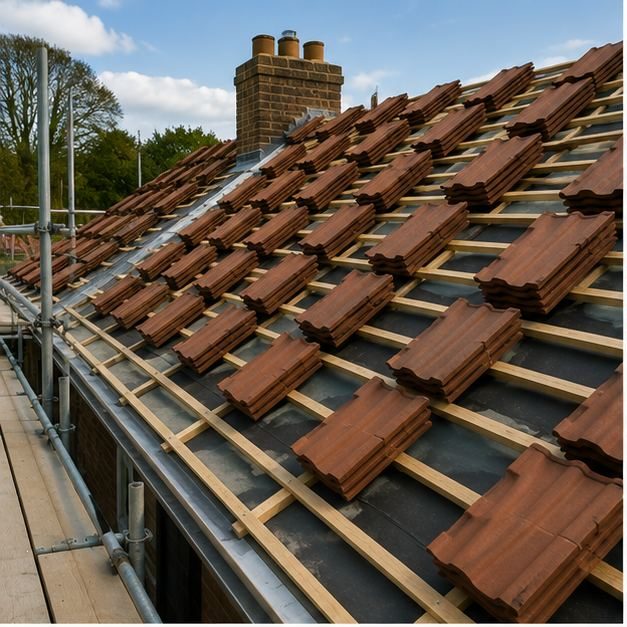
Cracked mortar fillets are a frequent culprit. Many older extensions in the area were finished with a sand and cement fillet where the roof meets the house wall, rather than proper lead flashing, largely because it was quicker and cheaper at the time of construction. Mortar is rigid and the house and extension move slightly differently over time as they expand, contract and settle, so hairline cracks appear, widen with each freeze-thaw cycle through the winter, and eventually let water track down into the roof timbers or the wall below unnoticed for a long time.
Valleys where two roof slopes meet are another common source of leaks, especially if they have not been cleared of moss and debris for some time. A blocked or degraded valley can overflow during heavy rain rather than carrying water away efficiently, and on an older roof the valley lining itself may simply have corroded or split after decades of exposure to sun, frost and standing water. This kind of hidden deterioration is particularly common on the mid-century roofs found across Lawrence Weston, where original valley linings are now well beyond the point most manufacturers would expect them to last.
Flashing around the sides of an extension, where it meets a party wall or the main house, can also fail as lead ages, lifts, or is disturbed by later work such as new guttering, a satellite dish bracket or even routine gutter clearance carried out without much care. Because these areas are often hidden from view behind a chimney or partly obscured by the extension roof itself, problems can develop for a long time before a stain appears on a ceiling inside the house.
Movement between the original structure and a later addition is worth mentioning too. Extensions are rarely built on exactly the same foundations or to the same rigidity as the main house, so a small amount of differential settlement over the years is normal, and this slow movement is precisely what a rigid mortar joint or an old, stiffened lead flashing struggles to accommodate without eventually cracking or splitting.
If you have noticed damp patches near where an extension joins the main roof, it is worth having the whole junction properly inspected rather than just patching the visible symptom, since a repair applied to the wrong spot rarely solves the actual problem. Brunel Roofing Bristol can identify the underlying cause and advise whether a repair or a fuller re-roof is the more sensible long-term fix, so get in touch for an inspection and a quote.
Get a Free Quote for New Roof Installations in Lawrence Weston
Every roof is different — the fastest way to get an accurate answer is a quick chat with our team.