
Damp that seems to be connected to a chimney breast can come from more than one source, which is exactly why it's often misdiagnosed by homeowners trying to work it out themselves. On the older housing stock typical of Greenbank, a chimney stack has several separate components — pointing, flashing, flaunching, the pot itself — any one of which can be the actual source of a problem that shows up as a damp patch somewhere else entirely, sometimes on a completely different wall to the one the stack actually backs onto.
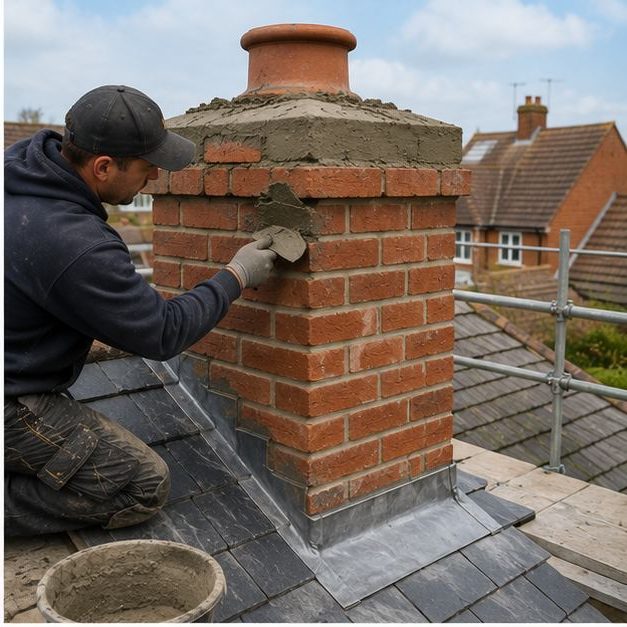
Penetrating damp, where rainwater is physically getting in through a defect somewhere on the stack, is the most common cause and is usually traceable to failed mortar joints, cracked flaunching at the top of the stack, or lead flashing that's lifted or split at the roof junction. Condensation is a different issue altogether, more likely on a disused or capped flue where warm, moist air from inside the house meets a cold chimney and condenses, leading to staining and a musty smell without any external leak at all, and this can be just as damaging over time even though no rainwater is directly involved in causing it.
Telling the two apart matters because the fixes are completely different — repairing flashing does nothing for a condensation problem, and improving ventilation won't stop water getting in through a cracked stack. A proper inspection looks at the whole picture, including whether the flue is in active use, before deciding on the cause, rather than jumping straight to a repair based on where the damp happens to be most visible from inside the property. A musty smell noticed mainly in colder, damper weather, without any obvious staining, can also point towards condensation rather than an active leak, and is worth mentioning to whoever carries out the inspection.
It's also worth knowing that a leak doesn't necessarily show up directly beneath its actual source. Water can travel along timbers or down the inside of a chimney breast before it becomes visible, so a stain in an upstairs bedroom might trace back to a defect on the far side of the stack rather than the nearest point. This is one of the more common reasons homeowners in Greenbank end up having a chimney checked more than once before the actual cause is found and properly resolved, sometimes after an earlier repair addressed the wrong element of the stack entirely.
Once identified, repairs might involve repointing, new flaunching, flashing replacement, or in some cases fitting a suitable cowl to a disused flue to reduce condensation and keep birds or rain out. The right fix depends entirely on what's actually wrong, which is why diagnosis has to come before any repair work is agreed, rather than the other way around.
If damp keeps appearing near your chimney breast and you're not sure why, it's worth having someone trace it properly rather than repeatedly redecorating over the symptom. Brunel Roofing Bristol offers free inspections across Greenbank and can identify the actual cause before recommending any work.
Get a Free Quote for Chimney Repairs in Greenbank
Every chimney is different — the fastest way to get an accurate answer is a quick chat with our team.