
Most chimney problems can be resolved with repointing, brick replacement, or new flashing, but there comes a point on some of Greenbank's older stacks where patch repairs stop being the sensible answer. Recognising that point early can save money in the long run, since throwing repeated small repairs at a structure that genuinely needs rebuilding rarely holds up for long and often ends up costing more overall than a single, properly specified job carried out from the start.
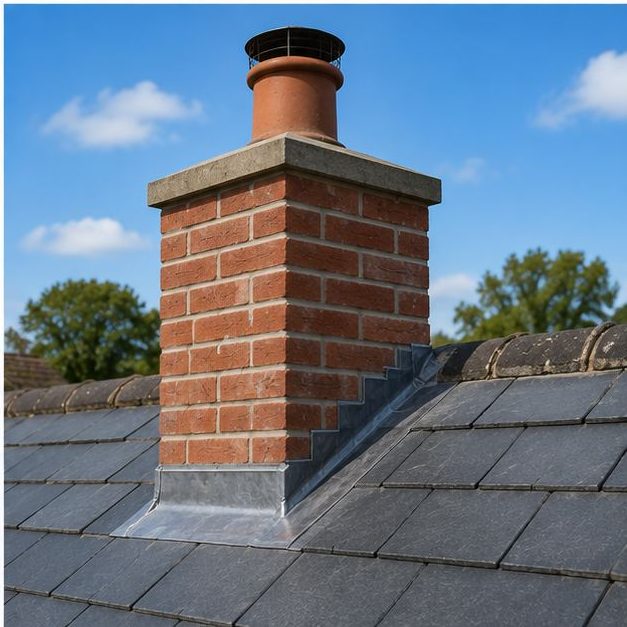
A few signs tend to point towards replacement rather than repair: brickwork that's crumbling or spalling across large sections of the stack rather than isolated patches, a lean or visible bulge that suggests the structure has shifted, mortar that's failed so extensively that repointing alone won't restore stability, or a combination of problems — cracked flaunching, loose pots, and failing brick — appearing together at once. Age plays a part too; a stack that's had multiple rounds of repair over the years may simply have reached the end of what patching can achieve, particularly if each repair has addressed a slightly different part of the same underlying weathering process rather than the stack as a whole.
A full assessment usually distinguishes between a partial rebuild, where only the section above roofline is taken down and reconstructed on sound foundations below, and a complete rebuild, which is reserved for stacks with more serious problems throughout their height. Partial rebuilds are the more common outcome for chimneys where the issue is concentrated in the upper courses exposed to weather, which is often the case on older Greenbank terraces where the enclosed section within the roof space has weathered far more slowly than the exposed stack above the tiles.
The rebuilding process itself involves carefully taking down the affected brickwork, then reconstructing it using matching bricks and an appropriate mortar mix — lime-based for older properties where the surrounding masonry is soft or handmade, to avoid a mismatch that could cause problems for the original brick over time. New flaunching, pots, and flashing are typically fitted as part of the same job, since it makes little sense to rebuild a stack and then leave old, failing components on top of it, only to need a second visit within a couple of years to address them separately.
Because the work involves taking a structure apart at height, scaffolding is generally required rather than ladder access, particularly on the taller terraced rooflines common in this part of Bristol. This adds to the overall job but ensures the work can be carried out safely and to a proper standard, and it gives a good opportunity to check the rest of the roof covering at the same time as the chimney work is underway.
If your Greenbank chimney has had one repair too many, it's worth getting an honest opinion on whether a rebuild would actually be more cost-effective in the long run. Brunel Roofing Bristol offers free inspections and will set out the options clearly, backed by a 15-year guarantee on completed work.
Get a Free Quote for Chimney Repairs in Greenbank
Every chimney is different — the fastest way to get an accurate answer is a quick chat with our team.