
Lead has been used to weatherproof the junction between chimney and roof for a very good reason — it's durable, flexible enough to be dressed around awkward shapes, and lasts for decades when properly installed. But decades is not forever, and on a good number of Hanham roofs, the original leadwork is now old enough that repair is no longer the most sensible option compared with replacement of the whole junction, flashing, soakers and all.
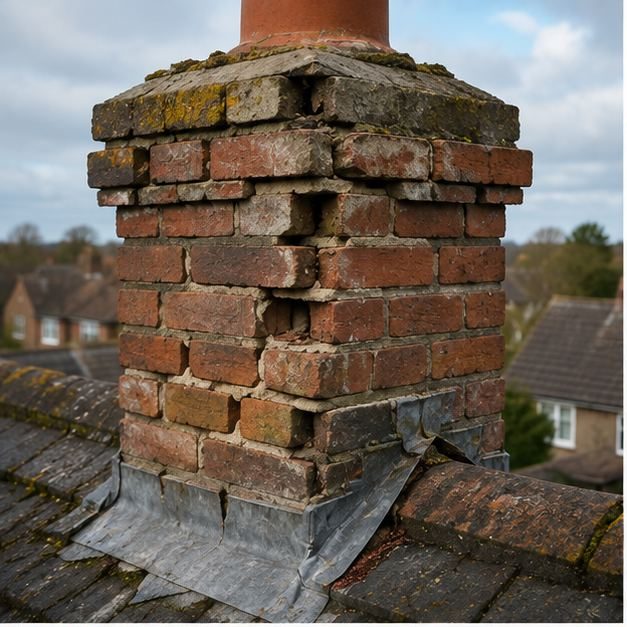
Lead fails gradually through a process called fatigue, caused by the metal repeatedly expanding and contracting as temperatures change through the seasons. Over enough cycles, this leads to cracking, splitting, or the lead simply lifting away from where it was originally dressed into the brickwork. Corrosion can also play a part, particularly where the lead has been in prolonged contact with certain roofing materials or where run-off from other parts of the roof affects it, gradually thinning the metal further over the years until it can no longer perform its job effectively.
A repair — resealing a lifted edge, patching a small split — makes sense when the lead itself is otherwise in reasonable condition. Full replacement becomes the better option once the lead is cracking in multiple places, has become brittle with age, or where the original installation was undersized or poorly detailed for the stack it's protecting. Trying to keep patching lead that's genuinely reached the end of its life tends to mean repeat call-outs for leaks that keep returning in slightly different spots on the same junction, year after year, at real ongoing cost. It's also worth checking whether any lead has been stolen or damaged during previous work on the property, since theft of lead flashing, though less common than it once was, still occasionally affects older Bristol roofs.
Replacement involves stripping out the old lead entirely and dressing new code lead around the stack, including the flashing itself, the soakers woven between the tiles at each side, and the back gutter that channels water around the chimney rather than into it. Doing all these elements together, rather than just the visible front flashing, is what actually stops leaks reappearing from a different part of the same junction a year or two later, and it gives a far more durable result overall for the property.
Because this work is carried out at roof height, proper access — usually scaffolding rather than a ladder — is needed to do the job safely and to inspect the surrounding brickwork and roof covering at the same time, which often reveals whether any other repairs are worth doing while the access is already in place and paid for.
If your Hanham chimney has a history of recurring leaks, it may be a sign the leadwork needs replacing rather than repairing again. Brunel Roofing Bristol offers free inspections and can give you an honest assessment of which option makes more sense for your roof.
Get a Free Quote for Chimney Repairs in Hanham
Every chimney is different — the fastest way to get an accurate answer is a quick chat with our team.