
Every mortar joint on a chimney stack is fighting a slow, ongoing battle against wind, rain, and frost, and eventually — usually after several decades, sometimes sooner on more exposed stacks — that battle starts to show. Across Hanham, where properties range from older village housing to more recent development, we see mortar in every stage of that process, from lightly weathered to genuinely failed and letting water straight through to the brick behind it without any resistance at all.
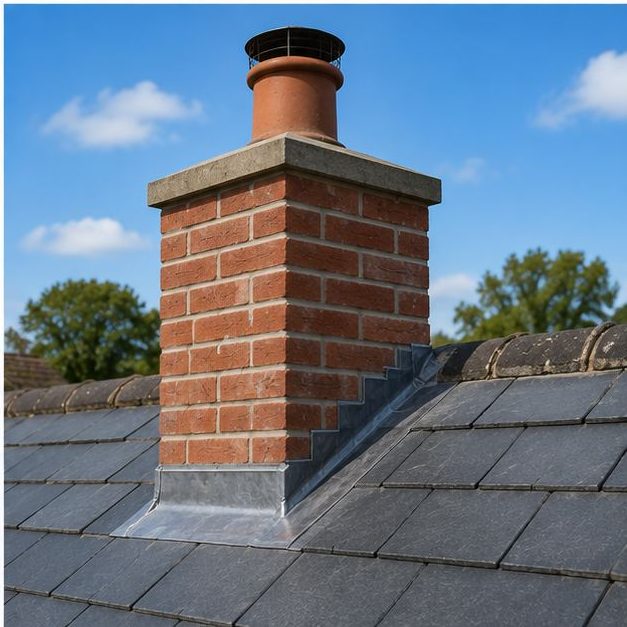
Weathering typically starts at the surface, with mortar losing its smooth finish and becoming rougher and more porous. Left long enough, this progresses to erosion deep enough that joints become recessed, sometimes by a centimetre or more, leaving gaps where water can sit rather than run off. At this stage, moss and small plants often take hold, which is usually a visible sign from ground level that repointing is overdue rather than simply cosmetic, and a stack in this condition is generally not far from needing more significant repair work altogether.
The actual repair work starts with raking out the old, weakened mortar to a sensible depth — not just skimming the surface, which tends to fail again quickly — before repacking the joint with fresh material. Getting the mortar mix right matters more than people often expect: modern cement-based mixes are harder and less flexible than the lime mortars traditionally used on older brickwork, and using the wrong one on an older Hanham property can trap moisture and cause the brick itself to deteriorate rather than protecting it, sometimes creating a more expensive problem than the one it was meant to solve in the first place. Joints on the side of the stack facing the prevailing south-westerly weather typically weather faster than those on more sheltered elevations, which is why repointing sometimes only needs to address part of a stack rather than the whole thing.
Repointing also has to be finished correctly, matching the existing joint profile so the repair blends in and continues to shed water properly rather than creating a new weak point. A rushed or poorly finished repointing job can fail faster than the original mortar it replaced, which is why it's worth having it done properly rather than as a quick patch that will need revisiting within a few short years, undoing much of the value of the work already paid for.
Timing matters too — repointing carried out before winter, while joints are dry and the weather is settled, tends to cure and perform better than work rushed through in poor conditions, and it means the stack goes into the wetter months properly protected rather than being left mid-repair as the weather turns against it.
If you've noticed weathered or crumbling mortar on your Hanham chimney, it's worth having it assessed before another winter's rain gets into the joints. Brunel Roofing Bristol offers free inspections and can advise on the right mortar specification for your property.
Get a Free Quote for Chimney Repairs in Hanham
Every chimney is different — the fastest way to get an accurate answer is a quick chat with our team.